Car theft prevention tracker strategy guide

Driver installing car tracker in driveway

Vehicle theft is not a distant risk. It is an everyday reality for car owners and motorhome enthusiasts across the UK, and a well-planned car theft prevention tracker strategy is one of the most effective ways to respond to it. This guide covers how car theft prevention works in practice, from the baseline habits that reduce your exposure to the tracker features that give police a genuine chance of recovering your vehicle. Whether you drive a daily car or a high-value motorhome, what follows is a practical, layered approach built around real-world outcomes.

Table of Contents

Key takeaways

Point Details
Trackers support recovery, not prevention Tracking technology is most valuable after a theft occurs, not as a standalone deterrent.
Layered security is more effective Combining physical deterrents, immobilisers, and GPS tracking raises the difficulty for thieves significantly.
Thatcham approval matters Insurance companies recognise Thatcham-certified devices and often reward owners with lower premiums.
Pre-planning speeds up recovery Having your vehicle details and tracker information ready before an alert arrives accelerates police response.
Motorhomes need tailored solutions Larger vehicles require independent cellular or satellite GPS trackers rather than Bluetooth-based devices.

Your car theft prevention tracker strategy starts here

Before you consider which tracker to buy, you need to understand what tracking technology actually does. Aftermarket tracking systems primarily assist with recovery rather than outright prevention. That distinction matters. A tracker does not stop a thief from taking your vehicle. It gives you, and the police, the best possible chance of getting it back.

This means your strategy needs two distinct parts. The first part is about making your vehicle harder to steal in the first place. The second part is about maximising recovery speed if a theft does occur. Most owners focus only on the second part and wonder why their overall security still feels inadequate.

Baseline security: habits and physical deterrents

The most overlooked element of any anti-theft strategy is the simplest. Locking doors, securing keys, and parking in well-lit areas significantly reduce vehicle theft risk, yet these basics are routinely ignored. No tracker compensates for a car left unlocked in a dark car park.

Here is a practical car theft prevention tracker checklist for your everyday routine:

  • Lock every time. Do not rely on passive locking systems. Confirm the lock manually, especially in car parks where signal interference can prevent remote locking from working.

  • Hide keys and valuables. Keys left visible on a hallway table are a primary target for relay attack theft, where thieves amplify the key fob signal to unlock and start the vehicle from outside your home.

  • Use a Faraday pouch. Store your key fob in a signal-blocking pouch overnight. This eliminates relay attacks at source and costs under £10.

  • Choose your parking spot deliberately. Well-lit, busy, and overlooked locations deter opportunistic theft. CCTV coverage adds further protection.

  • Fit a visible deterrent. Steering wheel locks are inexpensive and highly visible. A thief choosing between two identical vehicles will almost always target the one without a lock.

Pro Tip: If you drive a keyless entry vehicle, test your Faraday pouch by placing your key inside and attempting to unlock the car. If the car responds, the pouch is not working and needs replacing.

These measures do not replace a tracker. They reduce the likelihood that you will ever need to use one.

Choosing the right vehicle tracker

Not all trackers are equal, and the differences between types are more significant than most buyers realise.

GPS versus Bluetooth trackers

Tracker type How it works Best use case Limitations
Hardwired GPS Connected to vehicle power supply Cars and motorhomes Requires professional fitting
Plug-in OBD-II GPS Plugged into the diagnostics port Quick setup for cars Visible and easy to remove
Battery-powered GPS Independent power source Trailers and caravans Battery life varies
Bluetooth (e.g. AirTag) Relies on nearby Apple devices Locating personal items Inadequate for vehicle theft

Bluetooth trackers like AirTag are inadequate for vehicle theft recovery due to range limits and the ease with which thieves can detect and disable them. For motorhomes and trailers specifically, GPS trackers with independent satellite or cellular connectivity outperform any Bluetooth-based solution.

When evaluating GPS car tracking solutions, prioritise these features:

  • Real-time alerts for ignition, movement, and geofence boundary breaches

  • Tamper detection that notifies you if the device is interfered with

  • Backup battery so the tracker continues operating if the main power is cut

  • Geofencing to define permitted zones and receive alerts when the vehicle leaves them

Rapid ignition and movement alerts improve police recovery chances significantly. Speed of notification is not a minor feature. It is the difference between a recovery and a write-off.

Subscription costs also require consideration. Built-in manufacturer systems such as GM OnStar carry monthly fees of roughly £20, and most standalone GPS trackers carry similar ongoing charges. Factor this into your total cost of ownership.

Pro Tip: When comparing trackers, check whether the subscription includes 24/7 monitoring by a control centre. Self-monitored trackers depend on you seeing the alert immediately. Monitored trackers act even when you are asleep.

For Thatcham-approved options that meet insurance requirements, the right Thatcham tracker for your vehicle type is worth identifying before you purchase.

Installing and configuring your tracker effectively

Choosing the right tracker is only part of the process. How you install and configure it determines whether it actually works when you need it.

Installation: professional versus DIY

  1. Assess your vehicle type. Hardwired GPS trackers in cars and motorhomes should be professionally installed to avoid wiring errors and to conceal the device properly.

  2. Choose a concealed location. The tracker should not be visible from outside the vehicle or easily accessible from inside. Common locations include behind dashboard panels, within door cavities, or beneath the vehicle floor.

  3. Avoid the OBD-II port for high-value vehicles. Plug-in trackers are convenient but are the first thing a knowledgeable thief will remove.

  4. Configure geofence zones immediately after installation. Set your home address and any regular locations as permitted zones. Any movement outside these zones at unusual hours should trigger an alert.

  5. Test every alert type before you rely on it. Move the vehicle, simulate a geofence breach, and confirm alerts arrive on your phone within the expected timeframe.

Configuration step Why it matters
Geofence setup Alerts you to movement outside normal areas immediately
Ignition alert Notifies you the moment the engine starts without your knowledge
Tamper alert Warns you if the device is being interfered with
Emergency contact list Speeds up police reporting when an alert is received

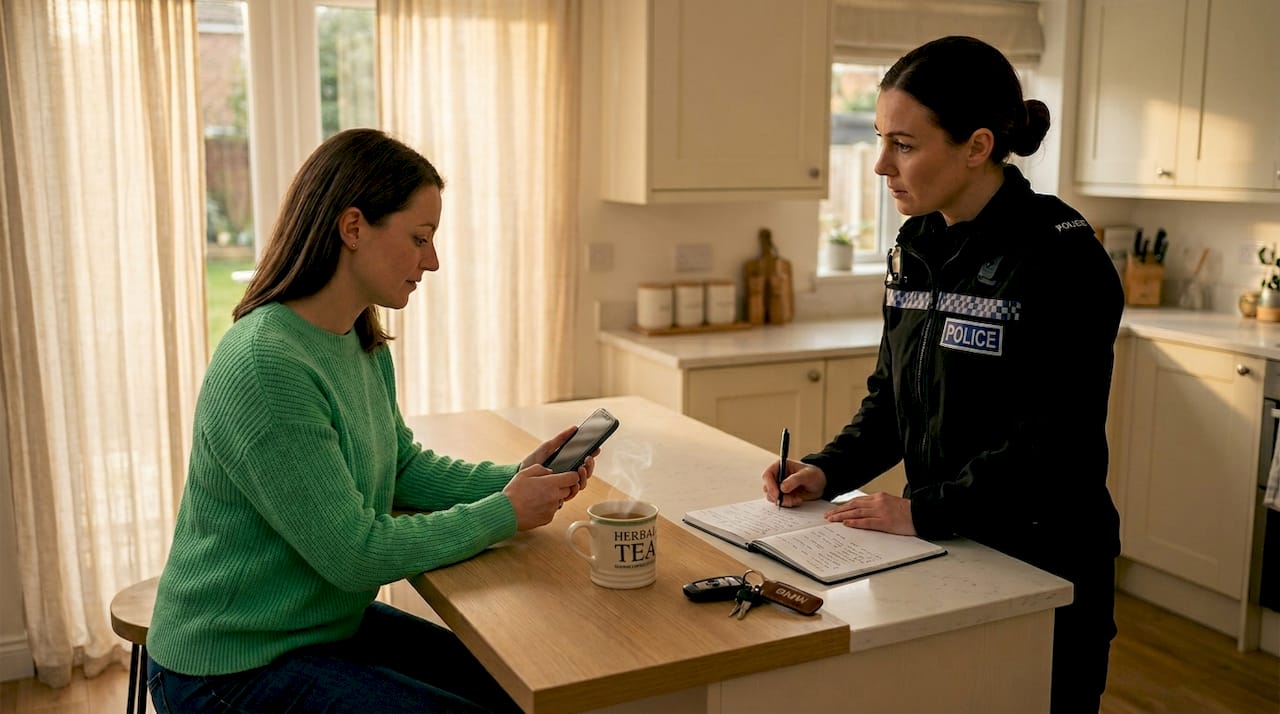
Effective tracker use requires immediate, pre-planned communication with police, including your vehicle registration, make, model, and tracker reference number. Keep this information saved on your phone and accessible within seconds. Police tracking programmes operate under strict conditions and do not substitute for prompt owner reporting.

Owner reporting tracker alert to police officer

Pro Tip: Create a “vehicle stolen” note on your phone containing your registration, VIN, insurance policy number, and tracker provider contact. If your car disappears at 2am, you will not be searching for paperwork.

Layering your security for maximum protection

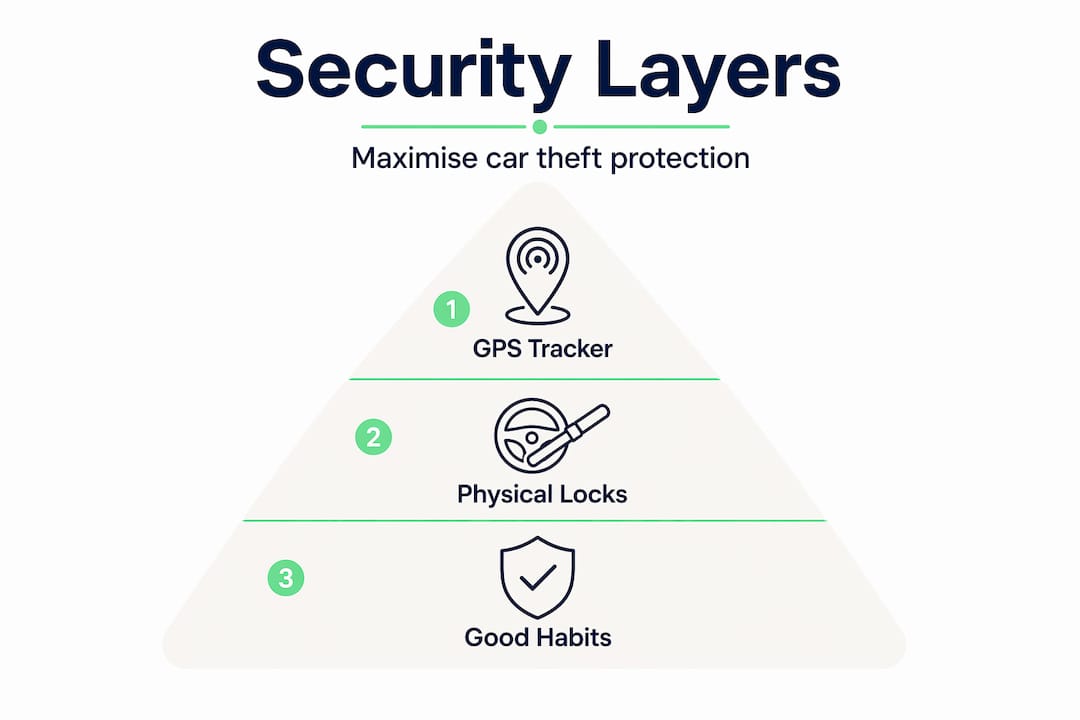
A single security measure, however good, leaves gaps. The most effective automotive theft protection combines multiple layers that each raise the cost and risk for any potential thief.

Tracking is most effective as part of a layered approach combining deterrence and recovery tools. Here is how the layers work together:

  • Ghost immobilisation. A ghost immobiliser prevents the engine from starting without a specific sequence of button presses known only to the owner. Unlike traditional immobilisers, there is no visible component for a thief to bypass.

  • No-pin, no-start systems. These no-start immobilisation systems require an authorised digital signal before the engine will start. They complement GPS tracking by preventing the vehicle from being driven away in the first place.

  • VIN etching. Etching the Vehicle Identification Number onto windows and major components reduces the resale value of stolen parts, which directly reduces the financial incentive for theft.

  • Visible alarms. A flashing LED indicator or audible alarm does not stop a determined thief, but it does redirect opportunistic ones.

  • Ongoing maintenance. Security systems degrade over time. Check tracker connectivity, test alerts, and replace batteries on a scheduled basis rather than waiting for a failure.

Security layer Primary function Works against
GPS tracker Recovery Opportunistic and organised theft
Ghost immobiliser Prevention Keyless relay attacks
Steering wheel lock Deterrence Opportunistic theft
VIN etching Reduces resale value Parts theft and organised rings
Geofence alerts Early detection Slow or staged vehicle removal

My perspective on tracker strategies and common mistakes

Hierarchy diagram of car theft security layers

I’ve seen a pattern repeat itself consistently. Owners invest in a quality tracker, fit it to their vehicle, and then assume the job is done. That assumption is where most strategies fall apart.

In my experience, the single biggest gap is not the technology. It is the absence of a response plan. A tracker alert at 3am is only useful if you know exactly what to do in the next five minutes. Most people do not. They spend critical time finding their insurance documents, looking up the non-emergency police number, and trying to remember their registration plate. By then, the vehicle is already miles away.

What I’ve found actually works is treating the tracker as the final layer, not the first. Physical deterrents and immobilisers reduce the probability of theft. The tracker handles the recovery if everything else fails. Motorhome owners face a particular challenge here. Their vehicles are often parked in remote locations, away from urban phone networks, which makes cellular-only trackers unreliable. Satellite-connected devices are not optional for that audience. They are necessary.

The value of Thatcham-approved trackers goes beyond the technology itself. The certification signals to insurers that your security meets a tested standard. That recognition translates directly into premium reductions and, in some cases, is a condition of cover for high-value vehicles. Choosing a non-approved device to save money often costs more in insurance terms over a two-year period.

— Thatcham

Protect your vehicle with trusted Thatcham-approved trackers

https://thatchamtrackers.com

Thatchamtrackers supplies insurance-approved GPS theft prevention devices independently tested and certified by Thatcham Research. Every tracker in the collection meets the standards insurers use to assess theft risk, and many customers see a reduction in their annual premium after fitting one. The range covers cars, motorhomes, and high-value vehicles, with options for 24/7 monitoring, geofencing, and tamper detection built in. Professional installation is available, and the team can advise on the right combination of tracking and immobilisation for your specific vehicle. Browse the full range of Thatcham-certified trackers or visit Thatchamtrackers to find the right solution for your needs.

FAQ

What is the difference between a GPS tracker and a Bluetooth tracker for car security?

A GPS tracker uses cellular or satellite networks to report your vehicle’s location in real time from anywhere in the country. Bluetooth trackers like AirTag rely on nearby devices to relay their signal, making them unreliable for vehicle theft recovery.

Do I need a Thatcham-approved tracker for insurance purposes?

Many UK insurers require or strongly recommend a Thatcham-approved tracker for high-value vehicles or those in high-risk categories. Fitting one can also reduce your annual premium, making it a practical financial decision as well as a security one.

How does a ghost immobiliser complement a GPS tracker?

A ghost immobiliser prevents the vehicle from starting without a specific button sequence, stopping theft before it happens. A GPS tracker then provides location data if the vehicle is moved by other means, such as being towed. Together they cover both prevention and recovery.

What should I do immediately when my tracker sends a theft alert?

Contact the police immediately with your vehicle registration, VIN, and tracker provider reference number. Pre-saving this information on your phone before any incident occurs is the single most effective way to speed up the recovery process.

Are GPS trackers effective for motorhomes parked in remote areas?

Standard cellular GPS trackers can lose signal in rural or remote locations. For motorhomes, a device with independent satellite connectivity is the appropriate choice, as it maintains accurate location reporting regardless of mobile network coverage.