

Dashcams are legal in the UK. You can own and use one without any special permit or licence. However, two sets of rules apply to every driver: the Road Vehicles (Construction and Use) Regulations 1986, which govern where you mount the device, and UK GDPR / the Data Protection Act 2018, which govern what you do with the footage. Get either wrong and you risk a fine, penalty points, or footage that a court will not accept.
Immediate compliance checklist:
- Mount the dashcam outside the wiper swept area, behind the rear-view mirror
- Do not obstruct the driver’s view of the road
- Switch audio recording off by default; turn it on only when justified
- Store footage securely and limit access to authorised personnel
- Keep original, unedited files if you intend to submit footage to police or an insurer
- If you operate a business vehicle, check whether you need to register with the ICO and pay the data-protection fee
Key takeaways
Dashcams are legal in the UK, but placement, data protection, and evidence handling rules apply to every driver and fleet operator.
| Point | Details |
|---|---|
| Placement rule | Mount behind the rear-view mirror, outside the wiper swept area; incorrect placement risks a fine and penalty points. |
| Business data obligations | Businesses must identify a lawful basis, publish a privacy notice, and register with the ICO (around £52 per year for many small operators). |
| Audio recording | Switch audio off by default; inward-facing cameras require clear signage and, for systematic use, a DPIA. |
| Evidence preservation | Keep the unedited original file; a NIP can be issued within 14 days where police pursue an offence from submitted footage. |
| Insurer checks | Confirm which devices your insurer recognises before buying; Thatcham-approved hardware carries a digital certificate that reduces disputes. |
Table of Contents
- Are dashcams legal in the UK? What the law actually says
- Where should you mount a dashcam to stay legal?
- Data protection: UK GDPR obligations for private drivers and small businesses
- Recording audio and inward-facing cameras: rules and best practice
- How police and courts treat dashcam footage
- Insurance and dashcams: telling your insurer and handling claims
- Actionable compliance checklist for private drivers and small businesses
- Why choose Thatcham-approved or insurer-friendly dashcams and trackers
- A practical perspective on everyday and fleet dashcam use
- Upgrade your vehicle security with Thatcham Trackers
- Primary sources and official guidance
- Sources
- FAQ
Are dashcams legal in the UK? What the law actually says
Ownership and use of a dashcam are lawful in the UK under ordinary circumstances. No statute bans them. The legal constraints come from two separate frameworks that apply simultaneously.
Road safety law. Regulation 30 of the Road Vehicles (Construction and Use) Regulations 1986 prohibits any object that obstructs the driver’s view through the windscreen. A dashcam that sits in the wrong position can breach this regulation regardless of its purpose. Penalties include a fine and penalty points.
Data protection law. The Data Protection Act 2018 and UK GDPR apply whenever footage captures identifiable individuals — faces, number plates, or any detail that could identify a person. The rules differ significantly depending on whether you are a private driver or a business operator:
- Private drivers recording purely for personal or household purposes benefit from a domestic-use exemption. UK GDPR does not apply to footage you keep for yourself and never share beyond your household.
- Business operators (fleet managers, taxi drivers, driving instructors, couriers) are data controllers the moment their cameras record identifiable people in the course of business. Full UK GDPR obligations apply: lawful basis, privacy notices, data security, and ICO registration where required.
The ICO’s guidance on dashcams and UK GDPR is the primary reference for business users. The Data (Use and Access) Act 2025 and the Surveillance Camera Code of Practice are also relevant for organisations operating systematic vehicle surveillance, and both are worth checking if you run a fleet.
Where should you mount a dashcam to stay legal?
Placement is where most drivers go wrong. The Gov sets out a practical swept-area reference: items must not intrude into the area cleared by the windscreen wipers, with a 40mm tolerance zone at the edges of that swept area. A dashcam sitting in the middle of the windscreen almost certainly breaches this rule.
Recommended mounting position: directly behind the rear-view mirror, on the passenger side of the mirror, as high up the glass as possible. This keeps the device out of the driver’s direct sightline and outside the swept area.
Practical points to check before you drive:
- Sit in the driver’s seat and confirm the camera body does not appear in your natural forward sightline
- Verify the camera does not sit within the wiper-cleared zone
- Route cables along the headliner or A-pillar trim so they do not create a distraction or a secondary obstruction
- Use a mount with a secure adhesive or suction fitting; a camera that falls onto the dashboard while driving creates its own hazard
Incorrect placement can attract significant fines and penalty points under the Construction and Use Regulations. An obstructing dashcam may also be flagged at an MOT inspection, and some insurers treat an improperly mounted device as a policy concern if it contributed to an incident.
Pro Tip: After fitting a dashcam, take a short test drive and review the first few minutes of footage. If the camera body or mount is visible in the frame, it is likely in the driver’s sightline too. Reposition before using the vehicle on public roads.
Data protection: UK GDPR obligations for private drivers and small businesses
Any footage that captures an identifiable face or number plate is personal data under UK GDPR. For private drivers who keep footage at home and share it only with police following an incident, the domestic exemption usually applies. For businesses, there is no exemption.
What businesses must do
The ICO’s small-business dashcam guidance sets out the core obligations:
- Identify a lawful basis. Legitimate interests is the most common basis for business dashcam use. Document your reasoning in a legitimate interests assessment.
- Publish a privacy notice. Tell people what you record, why, how long you keep it, and who can access it.
- Pay the ICO data-protection fee. Most small operators processing personal data regularly will need to register. The typical fee for many small businesses is a modest annual amount.
- Secure the footage. Restrict access to authorised staff. Use password-protected storage or encrypted SD cards.
- Handle subject access requests (SARs). Any individual captured on footage can request a copy. You must respond within one month.
- Carry out a Data Protection Impact Assessment (DPIA). Required where processing is likely to result in a high risk to individuals, for example systematic inward-facing monitoring of employees.
Audio recording is treated as more intrusive than video alone and may engage special-category data rules if it captures sensitive personal information. Switch it off by default.
Retention guidance
| Footage type | Suggested retention period | Notes |
|---|---|---|
| Routine driving footage | 7–14 days | Overwrite on a rolling basis unless an incident occurs |
| Incident footage | 30–90 days | Retain until the matter is resolved or a claim is closed |
| Footage under legal hold | Until proceedings conclude | Do not delete once litigation or a police investigation is active |
Pro Tip: Label incident clips with the date, time, and vehicle registration immediately after saving them. A clearly named file is far easier to locate when an insurer or solicitor requests it weeks later.
Recording audio and inward-facing cameras: rules and best practice
Inward-facing cameras — used widely by taxi operators, driving instructors, and fleet managers — are treated as significantly more intrusive than forward-facing dashcams. The ICO’s vehicle surveillance guidance recommends turning audio off by default and conducting a DPIA where inward-facing recording is systematic.
For drivers and operators using an internal driver camera, the following steps reduce regulatory risk:
- Display a clear sticker or notice visible to passengers before they enter the vehicle. Example wording: “This vehicle is fitted with audio and video recording equipment for safety and security purposes. Recordings are retained for [X] days. For more information, contact [business name] at [contact details].”
- Notify employees in writing if inward-facing cameras monitor staff. Update employment contracts or staff handbooks accordingly.
- Switch audio off during private journeys or when the vehicle is used outside business hours.
- For taxis and private hire vehicles, check local licensing conditions. Some licensing authorities impose specific rules on in-vehicle recording.
Pro Tip: If your dashcam records audio only when triggered by a collision sensor or manual button, you reduce both the volume of personal data captured and the regulatory burden. Continuous audio recording of passengers is difficult to justify under a legitimate interests assessment.
How police and courts treat dashcam footage
Dashcam footage can start a prosecution without a police officer present at the scene. Legal advisers confirm that footage alone can be sufficient evidence for police to issue a Notice of Intended Prosecution (NIP). Admissibility depends on meeting several criteria.
Admissibility criteria
- Relevance — the footage must show the alleged offence clearly
- Clarity — the image quality must be sufficient to identify the vehicle, driver, or behaviour
- Authenticity — the file must be the unedited original, not a screen recording or re-upload
- Context — footage showing events immediately before and after the incident strengthens the submission
- Provenance — metadata (time, date, GPS coordinates) must be intact and consistent with the claimed circumstances
How to submit footage to police
Many forces now accept public uploads through online portals. The National Dash Cam Safety Portal, operated in partnership with several UK police forces, allows members of the public to upload footage directly. Check your local force’s website for the specific portal link, as processes vary by force.
- Save the original file from the SD card or device storage — do not edit, crop, or compress it
- Note the file name, creation date, and any GPS metadata
- Upload via the relevant force portal or deliver the original media in person if requested
- Provide your contact details and be prepared to sign a witness statement
- Keep a copy of everything you submit
Warning: Footage that shows the submitting driver committing a traffic offence — speeding, using a mobile phone, failing to stop — can be used to prosecute that driver. Police guidance confirms that a NIP is typically issued within 14 days of an alleged offence where police decide to pursue it. Think carefully before submitting footage if your own driving is visible in the clip.
Sharing footage on social media before or during a police investigation can complicate proceedings and may raise separate legal issues around privacy. Keep footage private until the matter is resolved.
Insurance and dashcams: telling your insurer and handling claims
You are not legally required to tell your insurer you have fitted a dashcam, but checking your policy terms is worth doing. Some insurers ask you to declare aftermarket devices, and a small number offer premium reductions for approved dashcams or Thatcham-approved trackers. No insurer guarantees a reduction, and the benefit varies by policy.
Dashcam footage is most valuable in a disputed liability claim. Clear footage showing the sequence of events can resolve a claim faster and prevent fraudulent third-party claims. Insurers increasingly use footage in fraud investigations, particularly for staged accidents.
Practical steps when making or defending a claim:
- Secure the original footage immediately after an incident; do not allow the device to overwrite it
- Provide an unedited copy to your insurer when requested — not a phone recording of the screen
- Include the time, date, and vehicle registration in any written submission
- If the footage is on a cloud-connected device, confirm with your provider how to export the original file
Pro Tip: Before buying a dashcam primarily to reduce your premium, call your insurer and ask which devices they recognise. Some policies specify Thatcham-approved or insurer-listed devices. Buying a device your insurer does not recognise may deliver no discount at all.
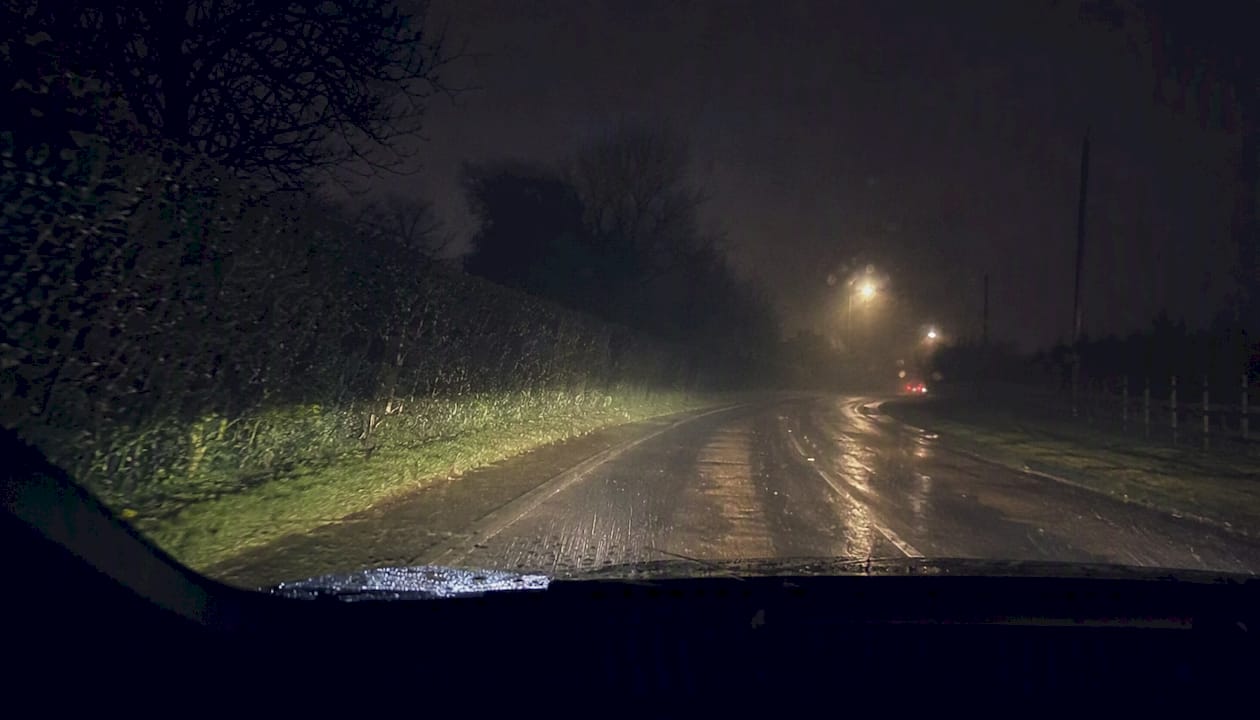
Night driving and poor-visibility conditions are where dashcam footage quality matters most. A device with a wide aperture lens and infrared capability captures usable footage in low light. Safe night driving practice also reduces the likelihood of incidents where footage quality becomes critical.
Actionable compliance checklist for private drivers and small businesses
Private drivers
- Mount the dashcam behind the rear-view mirror, outside the wiper swept area
- Confirm placement does not obstruct your forward view from the driver’s seat
- Route cables safely along trim panels
- Switch audio recording off unless you have a specific reason to activate it
- Keep original footage files for at least 14 days; extend retention immediately after any incident
- If submitting footage to police, preserve the unedited original and note all metadata
- Do not share footage on social media before a matter is resolved
Business operators and fleet managers
- Document your lawful basis for processing (legitimate interests assessment)
- Publish a privacy notice covering dashcam use
- Display clear signage in vehicles with inward-facing cameras
- Register with the ICO and pay the data-protection fee if required (around £52 per year for many small operators)
- Restrict footage access to authorised personnel only
- Set a written retention policy: 7–14 days for routine footage, 30–90 days for incident footage
- Prepare a SAR response process; you have one month to respond to any request
- Carry out a DPIA if you operate systematic inward-facing monitoring
- Update staff contracts or handbooks to reflect in-vehicle monitoring
- Review and update firmware on all devices at least annually
| Task | Private driver | Business operator |
|---|---|---|
| ICO registration | Not required (domestic exemption) | Required if processing personal data regularly |
| Privacy notice | Not required | Required |
| Signage for inward-facing cameras | Best practice | Required |
| DPIA | Not required | Required for systematic employee monitoring |
| SAR readiness | Not required | Required within one month |
Why choose Thatcham-approved or insurer-friendly dashcams and trackers
Thatcham Research is the UK’s central automotive risk intelligence organisation. It independently tests and certifies vehicle security systems, and insurers use Thatcham ratings to assess theft risk and set premiums. A Thatcham-certified device carries a digital certificate that insurers recognise, which removes ambiguity when you need to prove compliance with a policy condition.
For dashcam use specifically, Thatcham-approved hardware offers several practical advantages:
- GPS time and location stamps that are synchronised and tamper-evident, strengthening the provenance of any footage submitted to police or an insurer
- Secure original-file export so the unedited clip can be extracted without compression or quality loss
- Tamper-alert integration that logs if the device is moved or disconnected, preserving chain of custody
- Monitoring compatibility allowing remote live view and incident alerts, particularly useful for fleet managers
The 4G dashcam with remote live view and tracking from Thatcham Trackers combines GPS tracking with dashcam functionality, giving fleet operators a single device that satisfies both insurer tracking requirements and evidential recording needs.
When evaluating any device, check for: Thatcham certification class (S5, S5+, or S7), an accepted digital certificate, a professional installation network, and a warranty that covers the device for the duration of your insurance policy.
Pro Tip: When submitting footage to an insurer after an incident, a GPS-stamped clip from a Thatcham-approved device is far less likely to be challenged on authenticity grounds than footage from an uncertified consumer camera. The certification effectively vouches for the device’s integrity.
A practical perspective on everyday and fleet dashcam use
The legal framework around dashcams is not complicated once you separate the two questions: where the camera sits, and what you do with what it records. Most compliance failures come from drivers who mount a dashcam correctly but then share footage carelessly, or from businesses that treat dashcams as CCTV without applying the same data-management discipline.
For private drivers, the practical recommendation is straightforward: mount correctly, leave audio off, and treat the SD card as evidence the moment anything significant happens. Do not format it, do not share clips online, and do not submit footage to police without reading the clip first to check your own driving.
For small fleets, the discipline required is closer to running a CCTV system than fitting a consumer gadget. A written policy, ICO registration, clear signage, and a SAR process are not optional extras. They are the difference between a dashcam that protects the business and one that creates liability. A 2025 UK court ruling confirmed that private individuals who submit footage for policing of road crimes do not automatically become data controllers liable under UK GDPR for those specific submissions, which is a meaningful reassurance for members of the public reporting dangerous driving. Business operators do not benefit from the same protection.
The benefits of responsible dashcam use are real: faster claims resolution, protection against fraudulent third-party claims, and objective evidence in disputes. The risks of careless use are equally real. Used correctly, a dashcam is one of the most reliable tools a driver or fleet operator has.
Upgrade your vehicle security with Thatcham Trackers
Thatcham Trackers supplies insurance-approved S5, S5+, and S7 certified tracking devices and dashcams with nationwide mobile installation. Every device comes with a mandatory digital certificate accepted by UK insurers, GPS tracking hardware integration, tamper alerts, and 24/7 monitoring compatibility.
Whether you need a dashcam for a single car, a motorhome, or a commercial fleet, Thatcham Trackers has a certified solution. Browse the full range of Thatcham-approved trackers or explore S7-certified devices for the highest level of insurer recognition.
Primary sources and official guidance
The following sources cover the specific legal questions this article addresses. Consult them directly for the official wording.
- Placement and obstruction rules: Road Vehicles (Construction and Use) Regulations 1986, Regulation 30 and the Gov — these two sources answer every question about where a dashcam may legally sit on a windscreen.
- Data protection for businesses: ICO guidance: Dashcams and UK GDPR — what small businesses need to know — covers lawful basis, privacy notices, ICO fee, SARs, and DPIA requirements.
- Inward-facing cameras and audio: ICO guidance on surveillance in vehicles — the primary reference for audio recording, signage, and employee monitoring obligations.
- Evidence and prosecution: Auriga Advocates on dashcam prosecution and Caddick Davies on police use of footage — both explain admissibility criteria, NIP timing, and submission processes.
- Police upload portals: Check your local force’s website for the relevant portal. Many forces participate in the National Dash Cam Safety Portal for public submissions.
This article is general information, not a substitute for advice from a qualified lawyer. Consult a qualified legal professional about your own circumstances before acting on anything here.
Sources
- Dashcams and UK GDPR: what small businesses need to know
- Legislation
- Gov
- Can dashcam footage be used to prosecute drivers? | Auriga Advocates
- Can The Police Use Dash Cam Footage to Prosecute? | Caddick Davies
FAQ
Can police prosecute a driver based on dashcam footage alone?
Yes. Legal advisers confirm that dashcam footage can be sufficient to start a prosecution without a police officer present at the scene. Where police pursue the matter, a Notice of Intended Prosecution is typically issued within 14 days of the alleged offence.
Is a dashcam an MOT failure?
A dashcam will not automatically fail an MOT, but one that obstructs the driver’s view through the windscreen can be flagged as a reason for failure. Mounting the device behind the rear-view mirror and outside the wiper swept area avoids this risk.
Do you need to tell your insurer if you fit a dashcam?
There is no legal requirement to notify your insurer, but checking your policy terms is advisable. Some insurers ask you to declare aftermarket devices, and some offer premium reductions for recognised or Thatcham-approved devices.
Do you need a warning sticker for a dashcam?
A warning sticker is not legally required for a forward-facing dashcam used by a private driver. For business vehicles with inward-facing cameras, the ICO recommends clear signage stating that recording takes place, who operates the system, and how to obtain more information.
Can dashcam footage be used against the driver who submitted it?
Yes. Footage that captures the submitting driver committing a traffic offence can be used to prosecute that driver. Review any clip carefully before submitting it to police or sharing it publicly.