

GPS car tracking systems are classified into three primary types based on their installation method: hardwired trackers, OBD-II plug-in trackers, and battery-powered trackers. Each type differs in power source, installation complexity, and the depth of vehicle data it can access. Understanding the types of GPS car tracking systems helps car owners and fleet managers choose the right device for their security needs, budget, and vehicle setup. Brands such as Bouncie and Tracki serve the personal market, while Thatcham-approved trackers meet the certified standards required by UK insurers.
1. What are the main types of GPS car tracking systems?
GPS car trackers fall into three categories: hardwired, OBD-II plug-in, and battery-powered units. This classification is the most practical starting point for any buyer, because it determines how the device is powered, how it is installed, and what data it can collect. Hardwired and OBD-II units draw power continuously from the vehicle. Battery-powered units offer flexible placement but require regular charging.
The right choice depends on whether you need permanent, tamper-resistant monitoring or a portable solution you can move between vehicles. Fleet managers typically prioritise hardwired systems. Personal car owners often favour OBD-II plug-in devices for their convenience.
2. Hardwired GPS trackers: features and best use cases
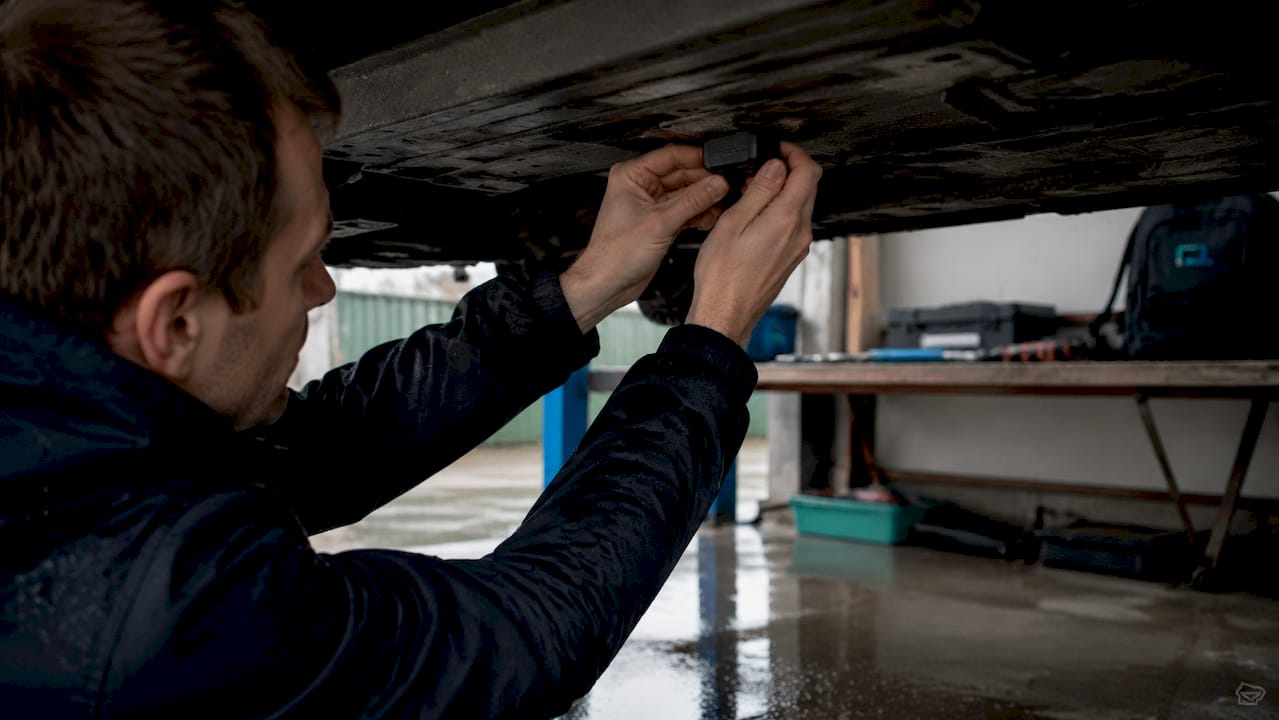
Hardwired GPS trackers connect directly to a vehicle’s electrical system. This gives them a continuous power supply and makes them far harder to remove without specialist knowledge. They are the preferred vehicle tracking option for enterprise fleets and high-value vehicles.
Hardwired trackers can connect to the vehicle CAN bus, enabling advanced monitoring of ignition status, fuel levels, cargo conditions, and even vehicle immobilisation controls. This level of integration goes well beyond simple location tracking. Fleet managers gain a live operational picture of every vehicle in their group.
Key features of hardwired GPS trackers include:
- Continuous power from the vehicle battery, with no charging required
- CAN bus integration for ignition, fuel, and cargo data
- Tamper resistance due to concealed wiring and fixed installation
- Vehicle immobilisation capability on compatible systems
- Third-party sensor support for temperature, door status, and more
Professional installation is non-negotiable for hardwired trackers. Incorrect wiring can trigger diagnostic errors, cause electrical faults, and void the vehicle manufacturer’s warranty. Always use a certified installer, particularly for Thatcham-approved devices where installation standards are part of the certification.
Pro Tip: Ask your installer to route the tracker wiring behind the dashboard trim and away from the OBD-II port. A device hidden near the spare wheel cavity or under a seat rail is significantly harder for a thief to locate and remove.
3. How do OBD-II plug-in GPS trackers work?
OBD-II plug-in trackers are the most accessible vehicle tracking option for personal car owners. They require no tools and no specialist knowledge to install. The OBD-II port is found under the dashboard in most vehicles manufactured since 1996, making these trackers compatible with the vast majority of cars on UK roads.
Once plugged in, the tracker draws power directly from the port and begins transmitting location data immediately. OBD-II trackers also read vehicle diagnostic trouble codes and monitor engine parameters, adding genuine maintenance value beyond location tracking. This dual function makes them popular with drivers who want both security monitoring and vehicle health data in one device.
Typical features of OBD-II plug-in trackers include:
- Real-time car tracking with live location updates via cellular network
- Engine diagnostics including fault code reading and engine health alerts
- Trip logging with route history and mileage records
- Driver behaviour monitoring covering speed, harsh braking, and acceleration
- Geofence alerts when the vehicle leaves a defined area
Hardware costs typically range from £40 to £120, with monthly subscription fees between approximately £7 and £20. That ongoing cost matters more than the upfront price for most users. The main limitation is visibility: the device sits in a prominent port under the dashboard, making it easy for a thief to spot and remove within seconds.
4. Battery-powered GPS trackers: flexibility and limitations
Battery-powered GPS trackers offer placement freedom that hardwired and OBD-II devices cannot match. They attach magnetically to a vehicle’s chassis, wheel arch, or undercarriage, and can be repositioned or moved between vehicles without any tools. This makes them useful for covert monitoring, asset tracking, and situations where wiring is not practical.
The trade-off is battery life. Real-time tracking requires frequent cellular updates, which drains the battery considerably faster than low-frequency reporting modes. In practice, a tracker set to update every few seconds may need recharging every 3–5 days. Manufacturers’ battery life claims are typically based on low-frequency update settings, not continuous real-time use.
Key considerations for battery-powered trackers include:
- Magnetic mounting for tool-free attachment to metal surfaces
- Portable use across multiple vehicles or non-vehicle assets
- Covert deployment for theft recovery or discreet monitoring
- Battery life variability depending on update frequency settings
- Signal blockage risk if placed in a metal-enclosed cavity
Pro Tip: Set your battery tracker to a 60-second update interval rather than real-time mode when the vehicle is stationary. Most tracking apps support motion-triggered activation, which switches to faster updates only when the vehicle moves. This can extend battery life significantly between charges.
5. GPS tracking systems comparison: which type suits you?
Choosing between the three types comes down to your priorities. The table below summarises the key differences across the criteria that matter most to car owners and fleet managers.
| Criteria | Hardwired | OBD-II plug-in | Battery-powered |
|---|---|---|---|
| Installation | Professional required | Self-install, no tools | Self-install, magnetic |
| Power source | Vehicle electrical system | OBD-II port | Internal battery |
| Tamper resistance | High | Low | Medium |
| Real-time tracking | Yes | Yes | Yes (battery dependent) |
| Vehicle data access | Full CAN bus integration | Engine diagnostics | Location only |
| Best for | Fleets, high-value cars | Personal car owners | Covert use, assets |
| Typical hardware cost | £100–£300+ | £40–£120 | £30–£100 |
| Ongoing subscription | Yes | Yes | Yes |
Fleet managers consistently choose hardwired systems for their reliability and data depth. Personal car owners who want a quick setup and basic monitoring find OBD-II devices sufficient. Battery-powered trackers fill a specific niche: covert placement, multi-asset tracking, and vehicles where wiring is not feasible.
Subscription costs and software quality often determine long-term satisfaction more than the hardware itself. A cheap tracker paired with a poor monitoring platform delivers a frustrating experience. Prioritise the software and support package alongside the device specification.
6. How do technical and environmental factors affect GPS tracking performance?
GPS tracking accuracy depends on a three-part system working together. Location is determined through trilateration, where the device measures signal travel times from multiple satellites to calculate a precise three-dimensional position. This is distinct from triangulation, which is a common misconception. Once the position is calculated, the device transmits it via a cellular data network to a server, where the monitoring software displays it to the user.
Weaknesses in any part of this system impair service quality. A strong satellite signal means nothing if the cellular network in your area is unreliable. Equally, excellent network coverage cannot compensate for a device placed inside a metal-enclosed space that blocks satellite reception.
Factors that affect GPS tracking performance:
- Urban canyons: tall buildings reflect satellite signals, reducing accuracy in city centres
- Remote areas: limited cellular coverage disrupts real-time data transmission
- Device placement: metal enclosures block satellite signals; exposed positions perform best
- Software platform: a poor interface delays alerts even when the hardware functions correctly
- Network failures: cellular outages interrupt location updates regardless of device quality
Placing a tracker flat against the underside of a vehicle, away from thick metal panels, typically delivers the most reliable signal reception in both urban and rural environments.
For international use, how GPS tracking works across borders depends on whether the device supports roaming SIM cards and multi-network connectivity. Not all trackers handle this automatically.
Key takeaways
The most reliable GPS car tracking system for security and data depth is a professionally installed hardwired device, particularly one certified to Thatcham Research standards.
| Point | Details |
|---|---|
| Three core types | Hardwired, OBD-II plug-in, and battery-powered trackers each suit different needs. |
| Hardwired suits fleets | Professional installation delivers tamper resistance and full CAN bus data access. |
| OBD-II suits personal use | Plug-in devices offer engine diagnostics and real-time tracking with no installation required. |
| Battery life is overstated | Real-time tracking drains battery every 3–5 days; low-frequency modes extend life significantly. |
| Software costs matter most | Subscription and platform quality affect long-term satisfaction more than upfront hardware price. |
Thatcham Trackers’ view on choosing the right GPS tracker
The most common mistake buyers make is focusing entirely on the device and ignoring the total cost of ownership. Hardware is a one-time purchase. Software, cellular subscription, and support are ongoing commitments that shape the daily experience for years. A tracker rated highly on hardware but paired with a poor app will frustrate you within weeks.
The second misconception worth addressing is battery life. Manufacturers quote figures based on the lowest possible update frequency. If you need genuine real-time car tracking, budget for frequent charging or choose a hardwired or OBD-II solution instead. Battery-powered trackers are excellent for covert placement and asset monitoring. They are not the right tool for continuous fleet tracking.
Professional installation is not optional for hardwired devices. The hiding location matters as much as the device itself. A tracker found in thirty seconds by a thief provides no security value. Certified installers who understand vehicle architecture will place the device where it is genuinely difficult to locate.
Multi-GNSS receivers, which combine GPS with GLONASS and Galileo satellite networks, are now appearing in higher-end trackers. These devices maintain accuracy in environments where single-network GPS struggles, such as dense urban areas. For fleet managers operating in cities, this specification is worth prioritising.
— Thatcham Trackers
Explore Thatcham-approved GPS car trackers
Thatcham Research is the UK’s central automotive risk intelligence organisation. It independently tests and certifies vehicle security systems, and insurers use these ratings to assess theft risk. A Thatcham-approved tracker can reduce your insurance premium and satisfies insurer requirements for high-value vehicles.
Thatcham Trackers offers a full range of certified devices, from Thatcham S5 trackers with advanced hardwired monitoring to S7 battery trackers for flexible deployment. All devices are professionally installed by certified engineers. Visit Thatcham Trackers to find the right certified solution for your vehicle or fleet.
FAQ
What are the three main types of GPS car tracking systems?
The three main types are hardwired trackers, OBD-II plug-in trackers, and battery-powered trackers. Each differs in installation method, power source, and the level of vehicle data it can access.
Which GPS tracker type is best for fleet managers?
Hardwired GPS trackers are the standard choice for fleet managers. They offer continuous power, tamper resistance, and CAN bus integration for monitoring ignition status, fuel levels, and vehicle immobilisation.
Do OBD-II trackers work on all cars?
OBD-II plug-in trackers are compatible with most vehicles manufactured since 1996. The port is located under the dashboard and requires no tools to access, making installation straightforward for personal car owners.
How long does a battery-powered GPS tracker last?
Battery life depends on update frequency. Real-time tracking drains the battery every 3–5 days, while low-frequency update settings can extend life considerably. Manufacturer claims are typically based on the lowest frequency settings.
Does a Thatcham-approved tracker reduce insurance costs?
Yes. Thatcham Research certifies vehicle security devices to defined standards, and UK insurers use these ratings to assess theft risk. Fitting a Thatcham-approved tracker can lower your premium or satisfy a policy requirement for high-value vehicles.