

A professionally installed Thatcham-certified S5 or S7 tracker will not automatically void a UK vehicle manufacturer’s warranty. Claims can only be refused if the manufacturer proves the installation caused the specific fault. Use a Thatcham-recognised installer, keep every certificate and report, and your warranty stays intact.
- Using a Thatcham-recognised installer and obtaining detailed documentation before and after installation minimises warranty risks and proves the device did not cause faults.
- UK law requires manufacturers to demonstrate that an aftermarket tracker directly caused a fault before voiding a warranty, and independent install evidence supports this.
- Thatcham S5 and S7 devices meet strict technical standards, reducing the likelihood of electrical interference or tampering issues that could jeopardise warranty claims.
- Proper installation involves diagnostic checks, secure wiring, and thorough testing, with comprehensive reports crucial for resolving disputes.
- Maintaining all paperwork, including receipts, certificates, installation reports, and photographs, significantly improves chances of preserving warranty coverage in case of claims or disputes.
Table of Contents
- Warranty safe tracker install: five actions to protect your cover
- What UK law and consumer protections say about modifications
- Why Thatcham approval matters for warranty risk
- What professional installation actually involves
- Proving the tracker didn’t cause a fault
- Cost and timeline for a professional Thatcham tracker fit
- What years of tracker fitting across the UK have taught us
- Get a warranty safe tracker install done properly
- Sources
- FAQ
Warranty safe tracker install: five actions to protect your cover
A warranty safe tracker install comes down to evidence as much as equipment. Manufacturers cannot refuse a claim just because a tracker exists under the dashboard. They need proof it caused the fault, and you need proof it did not. That evidence has to exist before anything goes wrong, not after.
Five actions cover most of the risk:
- Book a Thatcham-recognised or otherwise qualified installer and get their credentials confirmed in writing before the appointment.
- Request a full installer report listing serial numbers, wiring notes, and before-and-after photos.
- Confirm the device itself carries Thatcham approval, either S5 or S7, and collect the digital certificate.
- Keep the purchase receipt, service history, and installer invoice together, and tell your insurer if your policy requires notification of security modifications.
- Get a written workmanship warranty from the installer, separate from the manufacturer’s warranty on the tracker hardware itself.
Pro Tip: Photograph the wiring loom before the panel goes back on. If a dealer ever questions the fit, a timestamped photo showing a clean, fused connection is worth more than any verbal reassurance from the installer.
What UK law and consumer protections say about modifications
The legal position favours the vehicle owner more than most people realise. Manufacturers do not get an automatic right to void a warranty simply because an aftermarket device has been fitted.
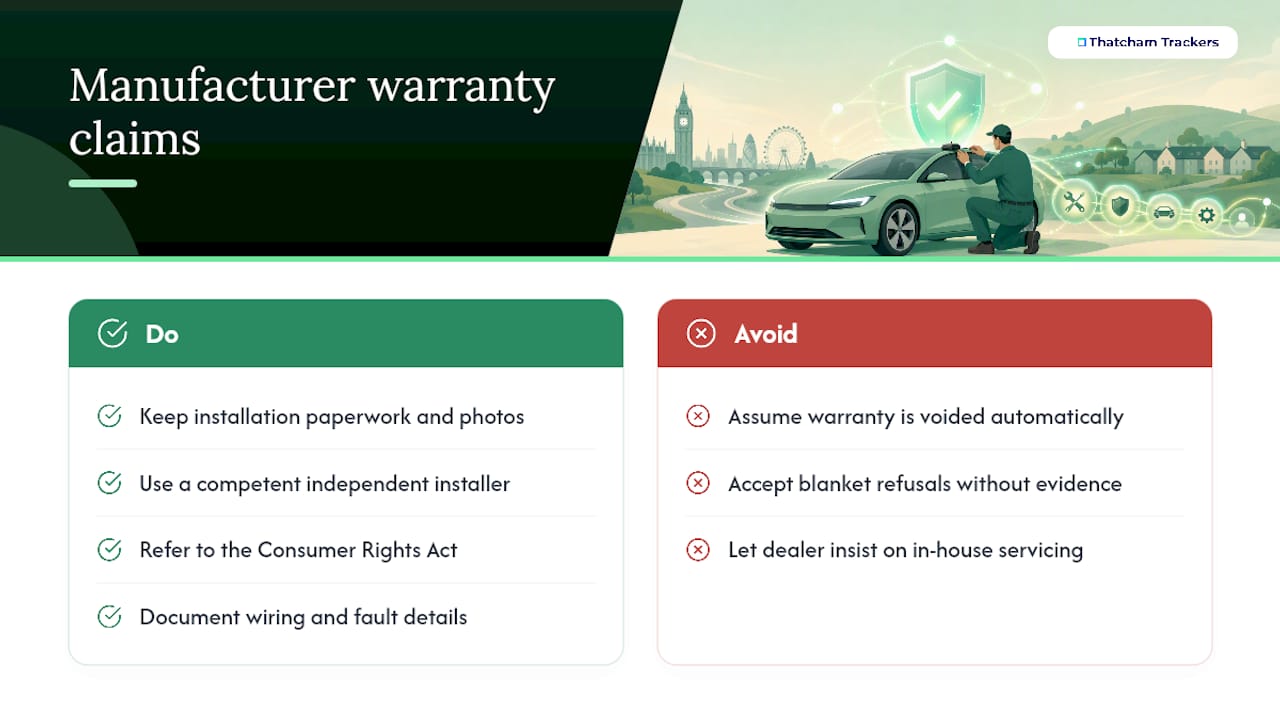
Under the Consumer Rights Act, a trader or manufacturer must demonstrate that a fault was caused by the modification, not merely coincide with it. In the first six months after a fault appears, the burden of proof typically sits with the seller, not the buyer. After that period, the balance shifts and the owner may need to provide evidence, which is exactly why documentation from the installation matters so much.
The Motor Vehicle Block Exemption Order adds a second layer of protection. It prevents manufacturers from forcing all servicing, repairs, or fitment work into their own dealer network as a condition of keeping the warranty valid. A tracker fitted by an independent, competent installer cannot be dismissed purely on the grounds that it was not done “in-house.”
A manufacturer must show a causal link between the aftermarket installation and the specific defect before it can lawfully refuse a warranty claim. Coincidence in timing is not the same as causation.
Ombudsman decisions bear this out in practice. Financial Ombudsman rulings on disputes involving immobilisers and warranty refusals show panels weighing materiality closely. Where an insurer or dealer refused a claim on a blanket basis, without evidence the device actually caused the fault, that refusal has not always held up. The outcome hinges on the specifics of the wiring, the fault, and the paperwork, not on the mere presence of a tracker.
Why Thatcham approval matters for warranty risk
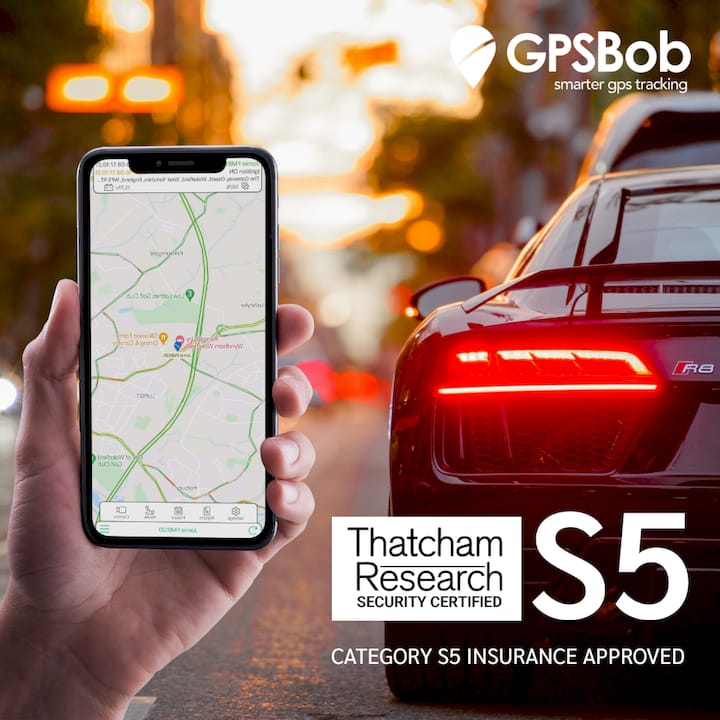
Thatcham Research is the UK’s vehicle security testing body, and its S5 and S7 categories are not marketing badges. They represent measurable technical standards that manufacturers and insurers both rely on.
An S5-rated device includes GPS tracking, driver identification, battery back-up, and connection to a 24/7 monitored centre, alongside tested resistance to tampering. S7 covers a lighter tier aimed at insurers wanting proof of location tracking without the full driver-ID and monitoring package. Both sit under the same Thatcham Security Certification framework, which requires products to meet defined technical criteria and undergo biennial review.
| Certification factor | Why it matters for warranty risk |
|---|---|
| CAN-bus compatibility | Reduces risk of electrical interference with factory systems |
| Battery back-up | Prevents power faults if the tracker loses main supply |
| Monitored service standard | Confirms the device meets ongoing performance checks |
| Resistance to attack | Tested against tampering, reducing unauthorised access risk |
| Biennial review | Ensures certification reflects current build quality, not a one-off test |
Insurers lean on this certification precisely because it removes guesswork. A device that has passed Thatcham’s product definitions and guidelines has already been assessed for the kind of integration faults that would otherwise worry a manufacturer’s warranty team.
What professional installation actually involves
A competent fitter does not simply tap into the nearest wire and hope for the best. The process follows a defined sequence, and skipping steps is where warranty disputes actually begin.
- Pre-installation diagnostic scan. The installer checks existing fault codes so any pre-existing issue is recorded before work starts, not blamed on the tracker later.
- Fit location assessment. Trackers are typically placed away from heat sources and moving parts, with wiring routed along factory looms rather than drilled through panels.
- CAN-bus and fused connections. Correct handling of the vehicle’s data network is the single biggest factor separating a safe fit from a risky one. Improper splicing into the CAN-bus is widely regarded as the leading cause of post-modification electrical faults.
- Commissioning tests. This includes voltage stability checks, signal strength tests, and, where relevant, immobiliser function tests to confirm nothing else on the vehicle has been disturbed.
- Final validation and sign-off. The installer logs telemetry data and confirms the device is reporting correctly before handing back the keys.
A complete report should list serial numbers, wiring notes, dated photographs, and the results of every test performed. If an installer cannot produce this, that is a warning sign worth acting on before booking.
Pro Tip: Ask to see the commissioning log, not just a certificate. A certificate proves the device is approved. A commissioning log proves it was tested correctly in your specific car.
A related consideration applies to any workshop modification, not just trackers. Broader automotive workshop practices around vehicle wiring carry similar risks when work is rushed or undocumented.
Proving the tracker didn’t cause a fault
If a dispute ever arises, the reader who kept paperwork wins far more often than the reader who trusted memory. Retain five specific items: the sales invoice, the device certificate, the full installer report, the commissioning log, and photographs taken before and after the fit.
Before booking, ask the installer directly:
- Are you Thatcham-recognised, and can you show proof?
- Have you fitted this device on my specific make and model before?
- What labour warranty do you offer on the workmanship itself?
- What tests will you run after fitting, and will I get a written log?
If a manufacturer or insurer later disputes a claim, present the documentation as a complete package rather than piecemeal. Citizens Advice recommends keeping proof of purchase and warranty paperwork together specifically because a scattered case is easier to dismiss. If the dispute escalates and the dealer will not budge, an independent technical inspection can establish, in writing, that the fault is unrelated to the tracker. That report becomes the strongest evidence available if the case ever reaches the Motor Ombudsman or a small claims process.
Cost and timeline for a professional Thatcham tracker fit
Pricing varies by device tier and vehicle complexity, but the shape of the cost is consistent: a device price band, a labour or fitment charge, and any optional monitoring or immobilisation add-on.
- Device cost: varies between S5 and S7 tiers, with S7 generally the more affordable entry point.
- Labour and commissioning: covers fitment, CAN-bus integration, and the test sequence described above.
- Optional extras: driver-ID fobs, dashcam power integration, or ghost immobilisation typically add to both time and cost.
A standard fit for a single vehicle usually takes a few hours, including diagnostic checks and full commissioning. Vans and motorhomes with more complex electrical systems can take longer. One detail worth remembering: installation warranties on workmanship commonly run separately from the device warranty itself, which is why keeping the two pieces of paperwork distinct matters when a claim ever needs to be traced back to its source.
What years of tracker fitting across the UK have taught us
Experience with S5 and S7 installations nationwide shows that disputes that go badly are almost never about the device itself. They are about missing evidence. An amateur wiring job, a certificate nobody kept, a commissioning test that was never logged. These are avoidable failures, not inherent risks of fitting a tracker.
The devices that pass Thatcham certification are built to integrate cleanly with modern vehicle electronics. The failure point sits with installation quality and paperwork, not the hardware. A reader who insists on a Thatcham-recognised fitter, asks for a proper commissioning log, and files every document away has done almost everything within their control to keep a warranty intact.
Our view is straightforward: certified devices and documented installations are not optional extras for the cautious. They are the baseline anyone fitting a tracker should expect, and any installer unwilling to provide that evidence is not the right choice for the job.
— Thatcham Trackers
Get a warranty safe tracker install done properly
Thatcham-approved S5 and S7 devices are available with nationwide professional installation options, built around the documentation this guide has covered.
Every fit comes with the paperwork that matters most if a warranty question ever arises: a full installer report, the device serial number, and a digital certificate accepted by UK insurers. Choose the Thatcham S5 for driver identification and full monitored tracking, or the Thatcham S7 for a more affordable insurer-approved option. Fleet owners and motorhome owners covering larger vehicles can also review the VanGuard series for tracking built around heavier electrical systems. Whichever device suits your vehicle, book your installation with a provider that hands you the certificate and report on the day, not weeks later when you actually need them.
Sources
- Thatcham Security Certification - Thatcham Research
- What is the Consumer Rights Act, and how does it affect my vehicle purchase? - The Motor Ombudsman
- Claim using a warranty or guarantee - Citizens Advice
FAQ
How much does tracker installation cost?
Costs depend on the device tier and vehicle complexity, combining the tracker’s price band with a labour and commissioning charge. Optional extras such as driver-ID or dashcam integration can also increase the total price.
What is the best GPS tracker without a subscription in the UK?
Most Thatcham-approved trackers, including S5 and S7 devices, rely on monitored connectivity to meet insurer requirements, so a genuinely subscription-free option rarely carries full Thatcham certification. If insurer acceptance matters, a certified S5 or S7 device is the safer route despite the ongoing service element.
What is the best car tracking device in the UK?
The right choice depends on what your insurer requires. Thatcham S5 suits drivers wanting full driver identification and 24/7 monitoring, while Thatcham S7 offers approved tracking at a lower price point.
How do I check if my car already has a tracker fitted?
Check the service history and any paperwork from previous owners for a Thatcham certificate or installer report. If none exists, a qualified installer can run a diagnostic scan to confirm whether a device is present.
Will a professionally fitted tracker void my manufacturer warranty?
No, not automatically. The manufacturer must prove the installation directly caused a specific fault before refusing a claim, which is why keeping installer documentation matters so much.