

A vehicle tracker is a GPS device fitted to your car that transmits its location in real time, and it is one of the most direct tools available for protecting your car’s financial value. Installing a Thatcham-approved tracker reduces theft risk, lowers insurance premiums, and strengthens your position when selling. Understanding how tracker protects car value means looking at three concrete mechanisms: deterrence, recovery, and insurance savings. All three work together to preserve what your car is worth.
How does a tracker protect car value through theft prevention?
Theft is the single fastest way to destroy a car’s value. A stolen vehicle that is recovered weeks later, or not at all, represents a total financial loss. A tracker changes that outcome significantly.
GPS tracking works by transmitting your vehicle’s location continuously to a monitoring centre or your smartphone. When a theft occurs, that location data goes directly to police, cutting recovery time from weeks to hours. Tracker-equipped vehicles achieve a 95%+ recovery rate. That figure means the overwhelming majority of tracked cars are returned to their owners in usable condition, avoiding the total-loss write-off that wipes out resale value entirely.

The deterrent effect matters just as much as recovery. Thieves actively avoid vehicles that carry a higher risk of being traced. A visible tracker sticker or a known Thatcham certification on a vehicle makes it a less attractive target. Fewer attempted thefts means less tampering, fewer broken locks, and no theft-related damage that would reduce your car’s condition rating at resale.
Key theft prevention benefits include:
- Real-time GPS location transmitted to police or a monitoring centre
- Rapid recovery reducing the likelihood of damage during theft
- Deterrent effect lowering the number of attempted break-ins
- Tamper alerts notifying you of suspicious activity before a theft completes
Pro Tip: Choose a monitored tracking system over a basic app-based tracker. Monitored devices provide real-time alerts and direct police liaison, which dramatically improves recovery speed compared to self-managed systems.
How do trackers lower insurance premiums and protect your finances?
Insurance premiums are a direct, ongoing cost that affects the total value equation of owning a car. A tracker reduces the risk your insurer carries, and insurers pass that reduction back to you. Installing an approved tracker can reduce premiums by 5% to 25%, depending on vehicle value and coverage level. On a high-value car, that saving can run to several hundred pounds per year.
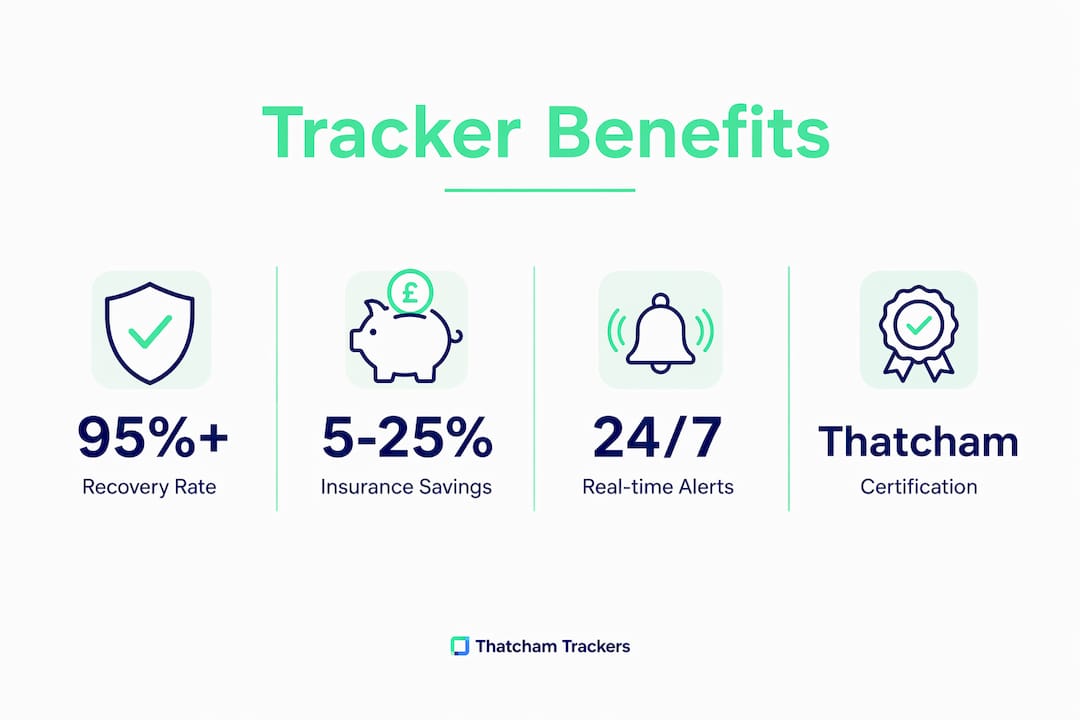
The savings compound over time. Most drivers recover their tracker installation costs through insurance savings within the first one to two years. After that, every year of reduced premiums is a direct financial gain that adds to the overall return on your vehicle investment.
Beyond premiums, trackers improve your position when making a claim. Insurers offer lower excess and faster claim approval when a vehicle carries an approved tracker. The real-time location data removes disputes about where a vehicle was at the time of an incident, which speeds up the process and reduces the risk of a claim being contested or undervalued.
“Insurance companies now see trackers as essential risk-mitigation tools, not optional extras, due to their high recovery rates and cost reductions.” — Diesel World Magazine
For high-value and keyless entry vehicles, some insurers now mandate tracker installation as a condition of coverage. This is not a penalty. It reflects the fact that these vehicles carry elevated theft risk, and a tracker is the most reliable way to offset it. You can read more about why insurance requires a Thatcham tracker and what that means for your policy in 2026.
Pro Tip: Always opt for a Thatcham-certified tracker when negotiating with your insurer. Thatcham Research is the UK’s central automotive risk intelligence organisation, and its certification is the standard insurers use to assess whether a device qualifies for a premium discount.
Monitored vs app-based trackers: which protects value more?
Not all trackers deliver the same level of protection, and the difference matters when you are trying to preserve car value. The two main categories are monitored systems and app-based systems.
| Feature | Monitored tracker | App-based tracker |
|---|---|---|
| Real-time police liaison | Yes | No |
| 24/7 monitoring centre | Yes | No |
| Annual subscription fee | Yes (typically £100–£200) | Lower or none |
| Insurance premium discount | Maximum (up to 25%) | Partial |
| Thatcham certification | S5 or S7 rated | Varies |
| Recovery speed | Hours | Dependent on owner response |
Monitored systems, such as those rated Thatcham S5 or S7, carry the highest certification levels. They connect your vehicle to a professional monitoring centre that contacts police directly when an alert is triggered. This removes the delay of you noticing an alert on your phone, unlocking it, and then calling 999 yourself. That time difference can determine whether your car is recovered intact or stripped for parts.
App-based trackers are lower cost and still provide useful location data, but they rely entirely on you being available and responsive. For insurance purposes, they typically attract smaller discounts. For resale purposes, a Thatcham S5 or S7 certificate is a concrete, verifiable credential that a buyer can confirm. An app-based tracker is harder to verify and carries less weight with insurers and buyers alike.
Pairing a tracker with a ghost immobiliser adds another layer. An immobiliser prevents the car from being started without the correct sequence or tag, meaning even if a thief locates and removes the tracker, the vehicle cannot be driven away.
Pro Tip: When comparing tracker costs, factor in the full UK pricing picture including installation and annual subscription. The total cost over three years is the figure that matters, not the upfront device price alone.
Does a tracker increase resale value over the long term?
A tracker contributes to resale value in ways that go beyond preventing theft. The long-term picture covers vehicle condition, buyer confidence, and documented security history.
-
Reduced theft-related damage. Cars that are never stolen avoid the structural and cosmetic damage that often accompanies theft attempts. Broken door locks, damaged ignition barrels, and scratched bodywork all reduce a car’s condition grade at resale. A tracker reduces the likelihood of these incidents occurring in the first place.
-
Faster insurance claim resolution. When an insured event does occur, tracked vehicles move through the claims process more quickly. A car that spends less time in a repair queue is returned to the road sooner, with less disruption to its service history and mileage record.
-
Buyer confidence. A vehicle with an official tracker installation often attracts higher resale offers. Buyers recognise that a tracked car has a lower theft risk and a cleaner claims history. That perception translates directly into willingness to pay more.
-
Documented security investment. Keep your Thatcham certification paperwork, installation receipt, and any monitoring subscription records. Present these to a prospective buyer as evidence of the vehicle’s security standard. This is a concrete differentiator in a private sale or part-exchange negotiation.
-
Deterrence of misuse. Continuous monitoring discourages unauthorised use of the vehicle, whether by a family member or a valet. Fewer unrecorded miles and no unreported incidents keep the vehicle’s history clean, which supports a stronger resale position.
The principle applies equally to other vehicles. Understanding how a tracker protects motorhome investment follows the same logic: a high-value leisure vehicle with a Thatcham-approved device is easier to insure, faster to recover, and more attractive to a future buyer. The tracker protect motorhome contents guide principle extends to the vehicle’s contents and fixtures, which carry their own replacement value.
Key takeaways
A Thatcham-approved tracker is the most direct tool available for protecting and maintaining your car’s financial value through theft deterrence, faster recovery, and lower insurance costs.
| Point | Details |
|---|---|
| Theft recovery rate | Tracker-equipped vehicles achieve a 95%+ recovery rate, preventing total-loss write-offs. |
| Insurance savings | Approved trackers reduce premiums by 5%–25%, with costs typically recovered within two years. |
| Monitored vs app-based | Monitored S5 or S7 systems deliver maximum insurance discounts and fastest police recovery. |
| Resale advantage | Documented tracker installation attracts higher offers and builds buyer confidence at point of sale. |
| Immobiliser pairing | Combining a tracker with a ghost immobiliser closes the gap that tracker removal alone would create. |
Thatcham Trackers’ view on tracker value protection
The conversation around trackers has shifted considerably over the past few years. When Thatcham Trackers first started working with customers on vehicle security, trackers were seen as a niche product for prestige car owners. That perception has changed. Insurers now treat Thatcham certification as a baseline requirement for high-risk vehicles, not a premium add-on.
The most common misconception we encounter is that a tracker is purely a theft recovery tool. It is that, but the financial case is broader. The insurance premium reduction alone justifies the cost for most drivers within two years. The resale benefit is a secondary gain that many owners do not consider until they are actually selling.
The other point worth making directly: not all trackers are equal in the eyes of an insurer. A device without Thatcham Research certification may provide location data, but it will not unlock the full range of insurance benefits. Buyers and insurers both look for the certification number. Without it, the device is a convenience tool, not a financial protection instrument.
The practical advice is straightforward. Choose a Thatcham S5 or S7 rated device, use a professional installation service, keep your paperwork, and review your insurance policy after installation. Those four steps cover the full value protection case.
— Thatcham Trackers
Protect your car’s value with Thatcham Trackers
Thatcham Trackers supplies insurance-approved vehicle tracking devices certified by Thatcham Research, the UK’s independent automotive security authority. Every device in the range meets the certification standards that insurers use to assess theft risk and calculate premium discounts.
Browse the full range of Thatcham-approved trackers to find the right device for your vehicle. Options include S5-rated trackers for reliable everyday protection and S7-rated systems for maximum security and insurance benefit. For vehicles where theft via relay attack is a concern, the ghost immobiliser range provides an additional layer that works alongside any tracker. All products are available with professional installation and come with the certification documentation your insurer requires.
FAQ
Does a tracker increase a car’s resale value?
Yes. A vehicle with a documented Thatcham-approved tracker installation attracts higher resale offers because buyers recognise the lower theft risk and cleaner claims history it represents.
How much can a tracker reduce my insurance premium?
Installing an insurance-approved tracker can reduce premiums by 5% to 25%, depending on vehicle value and the level of coverage. Most drivers recover the installation cost within one to two years through these savings.
What is the difference between a Thatcham S5 and S7 tracker?
Thatcham S5 trackers provide GPS tracking with a monitoring centre and police liaison. S7 trackers add driver identification technology, confirming the authorised driver is present before the vehicle moves. S7 devices attract the highest insurance discounts.
Do I need a tracker if my car already has a factory alarm?
A factory alarm deters opportunistic theft but does not provide location data after a vehicle is taken. A Thatcham-approved tracker adds recovery capability and qualifies your vehicle for insurance premium reductions that a standard alarm does not.
Can a tracker help if my car is taken abroad?
Yes. Most monitored Thatcham-approved trackers operate across Europe, transmitting location data to the monitoring centre regardless of which country the vehicle is in. This significantly improves recovery prospects for vehicles stolen and driven across borders.