

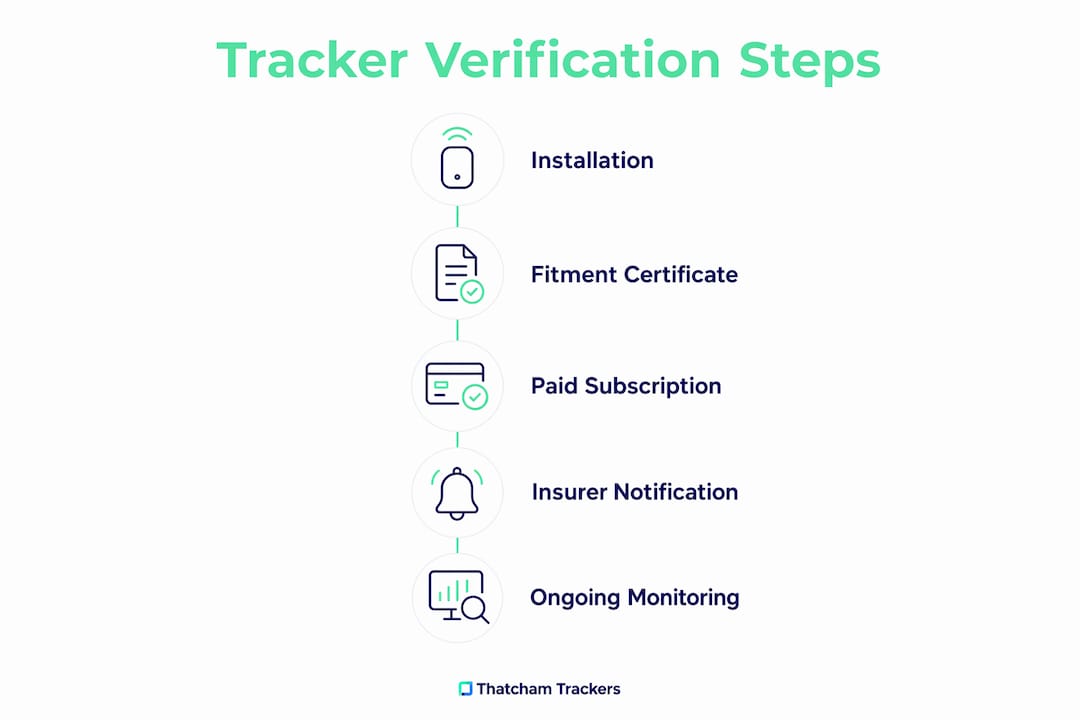
Insurers verify tracker installation by requiring a Thatcham-certified device, fitted by a recognised professional installer, and confirmed through a dated fitment certificate alongside proof of an active monitoring subscription. This is not a formality. Thatcham certification is the market standard in the UK, and only trackers with Thatcham accreditation installed by recognised engineers meet insurer requirements. Understanding how insurers verify tracker installation protects your claim and your premium from the moment the device goes in.
What documentation do insurers require to verify tracker installation?
Insurers rely on two core documents: a fitment certificate and proof of an active paid subscription. Both must be valid at the time of any theft claim, not just at the point of installation. Missing either document can result in claim denial, even if a working tracker is physically present in the vehicle.
The fitment certificate is issued by the authorised installer at the time of fitting. It confirms the device model, the installer’s credentials, the vehicle registration, and the date of installation. Insurers use this document to confirm that the tracker meets their approved standard and was not self-fitted. Self-installed or inactive devices often do not qualify and can lead to premium revocation or claim denial.

Proof of subscription confirms that the monitoring service was paid and active. This is typically a subscription receipt, an account statement, or a letter from the monitoring centre. Insurers treat this as evidence that the tracker was operational, not simply installed and forgotten.
Key documents you need to hold and present:
- Fitment certificate from an authorised, Thatcham-recognised installer, dated and signed
- Subscription confirmation showing the monitoring service was active and paid at the time of loss
- Device model details confirming the tracker meets the required Thatcham category, such as S5 or S7
- Installer credentials or company registration, which some insurers request alongside the certificate
- Renewal receipts if the subscription has been renewed, to show continuous coverage without gaps
Pro Tip: Store digital copies of your fitment certificate and subscription receipts in a cloud folder. Physical documents get lost; a timestamped digital copy is accepted by most UK insurers and is far easier to produce quickly during a claim.
Expired subscriptions are the most common reason valid claims are disputed. A tracker that was active at installation but lapsed six months later gives the insurer grounds to question whether the condition of cover was met at the exact time of theft.
How do insurers check tracker activation and ongoing monitoring status?
Active monitoring is a condition of cover, not a recommendation. A lapsed subscription or inactive tracker invalidates the policy’s theft cover, regardless of whether the device is physically present. Insurers do not simply take your word that the tracker was working. They verify status through documented evidence.
The verification process typically follows these steps:
- Certificate cross-check. The insurer checks the fitment certificate against their approved installer register to confirm the fitter was authorised at the time of installation.
- Subscription record request. The insurer contacts the monitoring provider or asks you to supply a subscription statement covering the date of the incident.
- Device status confirmation. Some insurers request a report from the monitoring centre confirming the device was active and transmitting at the time of the theft.
- Policy condition review. The insurer’s claims team reviews whether the tracker requirement was listed as a condition precedent in your policy wording and whether all conditions were met.
- Installer verification. For high-value vehicles, the insurer may contact the installing company directly to verify the fitment record.
Common pitfalls owners face include allowing subscriptions to lapse after the first year, assuming the tracker remains valid without an active monitoring service, and failing to update the insurer when a device is replaced or upgraded.
Pro Tip: Set a calendar reminder two weeks before your monitoring subscription renewal date. A brief lapse, even of a few days, can create a gap that an insurer’s claims team will identify and use to question the validity of your cover.
The tracker must be active at the exact moment of theft. An insurer will not accept a subscription that was renewed after the vehicle was stolen. The burden of proof sits with the policyholder, not the insurer.
Are there differences in verification for car versus motorhome trackers?
Thatcham Research certifies trackers under different categories, and the category required by your insurer depends on your vehicle type and policy terms. The two most relevant standards for private owners are S5 and S7.
| Standard | Vehicle type | Monitoring requirement | Typical insurer use |
|---|---|---|---|
| Thatcham S5 | Cars, light vehicles | 24-hour monitoring centre | Required for high-value cars |
| Thatcham S7 | Cars, motorhomes, vans | Self-monitoring via app | Accepted for standard policies |
| Thatcham S5 Plus | High-value cars, motorhomes | 24-hour monitoring with driver ID | Required by prestige insurers |
Motorhome insurers often apply stricter requirements than standard car policies. A motorhome represents a higher combined value of vehicle, fixtures, and personal contents, so many specialist motorhome insurers specify an S5 or S5 Plus device as a condition of theft cover. Verification for motorhomes follows the same certificate and subscription process, but the installer must hold credentials specific to the vehicle class.
Installation nuances also differ. Motorhomes have more complex electrical systems than standard cars, and the fitment certificate must confirm that the installer is qualified to work on that vehicle type. An insurer may reject a certificate from an installer whose credentials cover cars only. Checking the right Thatcham tracker for your specific vehicle before booking installation avoids this problem entirely.
Premium discounts also vary by standard. GPS and telematics anti-theft systems typically attract discounts of 5–15% on comprehensive policies. Devices meeting higher Thatcham categories tend to attract the upper end of that range, which makes the category choice financially relevant, not just a compliance matter.
How and when should you notify your insurer after tracker installation?
Notify your insurer on the same day the tracker is fitted. Providing proof of installation immediately after fitting improves your chances of a premium discount and avoids complications at renewal. Delayed notification does not invalidate the installation, but it can delay the discount and create ambiguity about when the condition of cover was first met.
When you contact your insurer, provide the following:
- The fitment certificate, including the date, installer name, and device model
- The Thatcham category of the device, such as S5 or S7, so the insurer can confirm it meets their policy requirement
- Subscription confirmation, showing the monitoring service start date and payment details
- The device serial number, which some insurers record against the policy for future verification
- A written acknowledgement request, asking the insurer to confirm in writing that the tracker has been noted on the policy
Request written confirmation from your insurer that the tracker has been recorded. Verbal acknowledgements are not sufficient if a dispute arises at claim time. An email reply or a policy endorsement noting the tracker is the standard you should aim for.
If your insurer required a tracker as a condition of cover at inception, failing to notify them promptly could leave a gap in your theft cover from the policy start date. Some policies state that the tracker must be fitted within a specified number of days of the policy starting. Check your policy schedule for this deadline and treat it as fixed.
The insurance proof requirements for UK vehicle owners are clear: the certificate, the subscription, and the written acknowledgement from your insurer form the complete record you need.
What happens if tracker verification fails during a claim?
Tracker compliance is treated as a condition precedent in most theft policies. This is a legal term with a specific meaning: the condition must be satisfied before the insurer is obliged to pay. If verification fails, the insurer is not simply entitled to reduce your payout. They are entitled to decline the claim entirely.
“Failure to provide a valid fitment certificate and subscription proof can result in claim denial, even where the tracker device is physically present in the vehicle.” This is the standard position across UK insurers who list tracker installation as a policy condition.
The consequences of failed verification include full claim denial, a demand to repay any premium discount already applied, and potential policy cancellation for non-disclosure. These outcomes are not theoretical. Owners commonly misunderstand that simply having a tracker installed is sufficient. The subscription must be paid and the proof must be presentable at claim time.
Legal and contractual implications are also worth noting. If you declared a tracker on your policy application and cannot prove it was active at the time of loss, the insurer may treat this as a material misrepresentation. That classification can affect your ability to obtain cover elsewhere.
The practical defence is straightforward. Keep your fitment certificate, subscription receipts, and insurer acknowledgement in one accessible location. Review the documents annually, at the same time as your renewal. The role a verified tracker plays in a successful claim is significant, and the paperwork that supports it is simple to maintain once organised.
Key takeaways
Insurers verify tracker installation through a fitment certificate, active subscription proof, and installer credentials, all of which must be valid at the exact time of any theft claim.
| Point | Details |
|---|---|
| Fitment certificate is mandatory | Insurers require a dated certificate from a Thatcham-recognised installer to validate any claim. |
| Active subscription is a condition of cover | A lapsed monitoring subscription invalidates theft cover, even if the device is physically present. |
| Notify your insurer on installation day | Same-day notification with written confirmation protects your cover and secures any premium discount. |
| Vehicle type affects the required standard | Motorhomes often require S5 or S5 Plus certification; cars may qualify under S7 depending on policy terms. |
| Failed verification can mean full claim denial | Insurers treat tracker compliance as a condition precedent, giving them the right to decline the claim entirely. |
Thatcham Trackers’ view on insurer verification requirements
The single biggest mistake vehicle owners make is treating the tracker installation as a one-time task. The fitment certificate matters, but the subscription is what keeps the cover alive. Owners who let their monitoring subscription lapse, often because the renewal email goes unnoticed, put themselves in a genuinely difficult position at claim time. The insurer’s position is contractually sound, and disputing it without documentation is rarely successful.
From experience working with car and motorhome owners across the UK, the paperwork gap is almost always the problem, not the device itself. The tracker works. The subscription expired. The certificate was never sent to the insurer. These are avoidable failures, and they cost owners real money.
The advice that consistently makes a difference is simple: treat your tracker documentation the same way you treat your MOT certificate. Keep it current, keep it accessible, and confirm with your insurer in writing that it is recorded on your policy. If you are ever unsure whether your device meets your insurer’s current requirements, contact your installer or Thatcham Trackers directly before a claim forces the question.
— Thatcham Trackers
Thatcham-approved trackers: certified installation made straightforward
Choosing the right tracker and getting it installed correctly removes the verification risk entirely. Thatcham Trackers supplies Thatcham-approved devices across S5, S5 Plus, and S7 categories, fitted by a network of recognised installers who issue compliant fitment certificates as standard.
Every installation through Thatcham Trackers includes the documentation your insurer needs: a dated fitment certificate, device details, and installer credentials. The monitoring subscription is set up at the point of fitting, so there is no gap between installation and active cover. For motorhome owners requiring specialist installation, the S5 Plus range covers the higher certification levels that prestige and specialist insurers specify. Contact Thatcham Trackers to confirm which category your policy requires before booking.
FAQ
What does an insurer need to verify a tracker?
Insurers require a dated fitment certificate from a Thatcham-recognised installer and proof of an active paid monitoring subscription at the time of the claim. Some insurers also request the device serial number and installer credentials.
Can I install a tracker myself and still get the insurance benefit?
Self-installed devices do not qualify for insurer verification or premium discounts. Professional installation by a recognised engineer is required for the fitment certificate that insurers accept.
How quickly should I notify my insurer after fitting a tracker?
Notify your insurer on the same day the tracker is fitted. Prompt notification secures any premium discount and confirms the condition of cover is met from the installation date.
What happens if my monitoring subscription lapses?
A lapsed subscription invalidates your theft cover for the period it was inactive. Insurers treat continuous monitoring as a condition precedent, meaning a gap in subscription gives them grounds to decline a claim.
Do motorhomes need a different tracker standard than cars?
Many specialist motorhome insurers require a Thatcham S5 or S5 Plus device rather than the S7 standard accepted for standard car policies. Check your policy schedule for the specific category required before installation.