

Installing a car tracker on a leased vehicle requires explicit written permission from your leasing company before any work begins. This is the single most important rule for UK leaseholders considering car tracking installation on a financed or contract hire vehicle. The leasing company, not you, owns the car. That ownership distinction changes everything about what you can and cannot do to the vehicle. Thatcham-approved trackers are the industry standard for insurance compliance in the UK, certified independently by Thatcham Research, the UK’s central automotive risk intelligence organisation. Getting the right device is only half the task. Getting permission for a car tracker is the other half, and skipping it carries real financial consequences.
What does your lease agreement say about installing car trackers?
Lease agreements almost always contain a modifications clause. This clause covers any change to the vehicle beyond normal use, and tracker installation falls squarely within it. Lease contracts prohibit unauthorised modifications, including tracking devices, and typically require that any approved additions are removed before the vehicle is returned.
The practical consequence is straightforward. If you install a tracker without approval and the leasing company discovers it at the end of the contract, you face financial charges. Those charges cover the cost of removal and any damage caused during fitting. In serious cases, the breach can trigger early termination of the lease.
Many leaseholders assume that a security device is automatically welcome. Leasing companies prioritise vehicle condition over added security benefits. Their concern is the car’s resale value and physical state, not your theft risk. That distinction matters when you are reading your contract.
The specific wording varies between providers. Some contracts use broad language such as “aftermarket parts” or “electrical alterations.” Others list prohibited modifications explicitly. Read your agreement carefully and look for any clause referencing electrical systems, accessories, or vehicle condition at return.
- Modifications clause: Covers any addition or alteration beyond standard factory specification.
- Electrical alterations: Hardwiring a tracker into the vehicle’s electrical system is a direct trigger for this clause.
- Condition at return: Trackers must be removed cleanly, with no trace of installation damage.
- Advance agreement: Small reversible modifications are sometimes permitted, but only when agreed in writing before installation.
Pro Tip: Read the “vehicle condition” and “modifications” sections of your lease contract before contacting your leasing company. Knowing the exact clause wording puts you in a stronger position when requesting approval.
How do you get permission from your leasing company for a tracker?
The permission process for a leased vehicle tracker follows a clear sequence. Contact the right person, make your request in writing, provide full details about the device, and keep every piece of correspondence.
- Identify the correct contact. Your leasing company, finance provider, or broker handles modification requests. Check your contract for the customer services or fleet management contact. Do not rely on a general helpline.
- Submit a written request. Email is the most reliable method. A written request creates a dated record. State clearly that you want to install a tracking device and that you are seeking formal approval before proceeding.
- Describe the tracker fully. Include the device name, the certification level (for example, Thatcham S5 or S7), the installation method, and whether the unit is fully removable without permanent alteration to the vehicle.
- Ask about their conditions. Some leasing companies impose specific requirements, such as approved fitters only, or a requirement to use OBD port devices rather than hardwired units. Ask directly so you can comply from the start.
- Obtain written confirmation. A verbal “yes” from a call centre agent offers no protection. Written approval is the only form that holds weight at lease end inspections.
- Store all documentation. Keep the approval email, any reference numbers, and the installer’s certificate together. You will need them if a dispute arises at vehicle return.
The leasing company may take several days to respond. Some larger fleet operators have dedicated modification approval teams. Smaller brokers may need to escalate the request to the finance house directly. Build this time into your planning.
Pro Tip: When emailing your leasing company, attach the tracker’s product specification sheet and the installer’s credentials. This removes ambiguity and speeds up the approval decision.
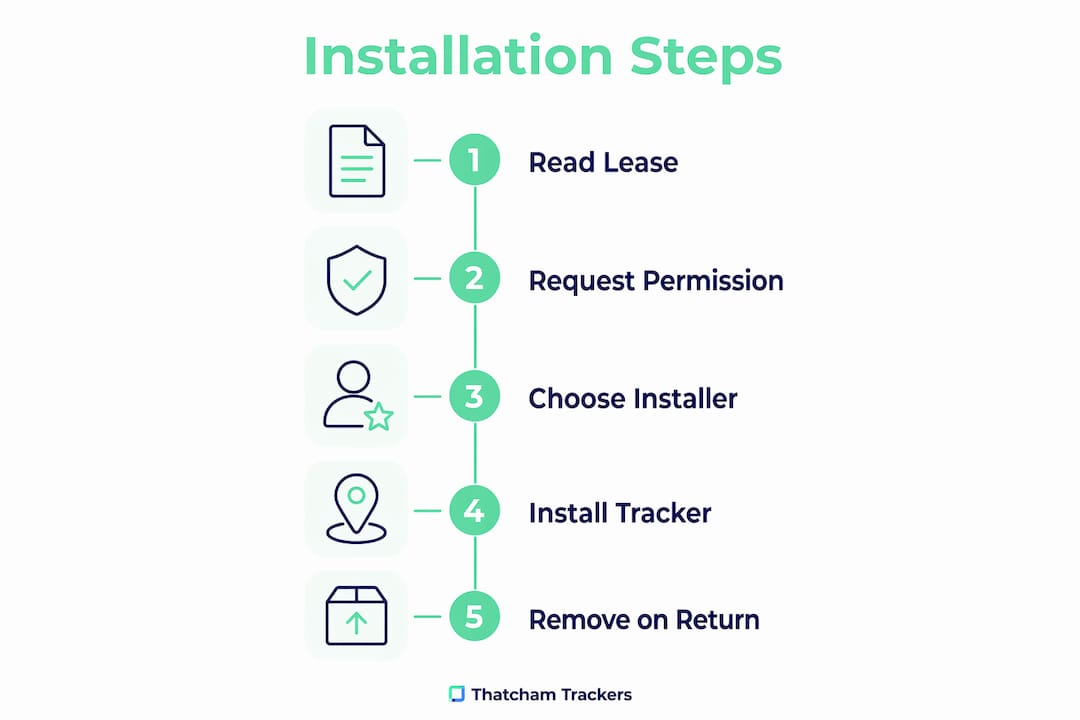
What are the best practices for installing a Thatcham-approved tracker on a leased vehicle?
Installation quality determines whether your tracker complies with both your lease agreement and your insurer’s requirements. Professional installation limits the risk of vehicle damage and aligns with leasing company expectations. A poorly fitted device can cause wiring faults, trigger warranty issues, or leave marks that attract charges at lease return.

Choose a certified installer
Thatcham-approved trackers must be fitted by an approved engineer to retain their certification status. Using an uncertified fitter voids the Thatcham approval, which in turn invalidates any insurance benefit. Always verify the installer’s credentials before booking.
Prioritise removable installation methods
The tracker must come out cleanly when the lease ends. OBD port devices are the simplest option as they require no wiring at all. Hardwired units are more secure but carry greater risk. Hardwiring can breach contract terms if it involves permanent alterations to the vehicle’s electrical system. Discuss this with your installer and confirm the method with your leasing company before fitting.
Verify the Thatcham certification level
Thatcham Research certifies trackers at different levels. S5 and S7 are the most commonly required by insurers for high-value vehicles. Check your insurance policy to confirm which certification level your insurer demands. Fitting a lower-rated device may not satisfy the policy condition.
Understand data protection obligations
Data protection laws require that drivers are informed about tracking and give their consent. This applies even on leased vehicles. If you are a business leaseholder with employees driving the car, you must notify those drivers formally before the tracker is activated. Failure to do so creates a separate legal exposure beyond the lease agreement.
- Use a Thatcham-approved device certified by Thatcham Research to satisfy insurer requirements.
- Book a certified engineer to fit the tracker and obtain a fitting certificate.
- Confirm removability with both the installer and the leasing company before work begins.
- Notify all drivers of the tracking device in writing before activation.
- Retain the fitting certificate alongside your leasing company’s written approval.
Pro Tip: Ask your installer for a written confirmation that the vehicle was returned to its original condition after fitting. This document is useful if the leasing company queries the installation at return.
For a detailed look at tracker certification levels and what each means for your insurance policy, Thatcham Trackers provides a clear breakdown for UK drivers.
What are the common mistakes when installing trackers on leased cars?
Most disputes between leaseholders and leasing companies stem from a small number of avoidable errors. Knowing them in advance removes the risk entirely.
“Finance providers focus on vehicle condition at lease end, making documented approvals critical.” — Nationwide Vehicle Contracts
Relying on verbal approval is the most common mistake. A phone call with a leasing company agent carries no legal weight. Verbal approval does not protect against end-of-term charges. Always follow up any conversation with a written summary and request email confirmation.
Installing without any permission is a direct contract breach. The finance company remains the registered owner of the vehicle, and any electrical alteration without written consent is a potential breach of contract. The consequences range from a removal fee to early lease termination.
Assuming security devices are automatically permitted is a widespread misunderstanding. Leasing companies do not grant automatic exceptions for trackers, even Thatcham-approved ones. Each request is assessed individually against the contract terms.
Ignoring privacy law creates a separate legal problem. Installing a GPS tracker without the owner’s permission is illegal and violates privacy rights. For business leaseholders, failing to inform drivers about tracking can breach UK data protection legislation.
Failing to remove the tracker at lease end is a straightforward but costly oversight. The device must be removed cleanly before the vehicle is returned. Any residual damage, wiring remnants, or adhesive marks will appear on the condition report and attract charges.
Key takeaways
Leaseholders who obtain written permission and use a certified installer avoid the financial and legal risks that catch most drivers out.
| Point | Details |
|---|---|
| Written permission is mandatory | Verbal approval offers no protection at lease end. Always obtain email confirmation. |
| Lease contracts cover trackers | Modifications clauses apply to tracking devices. Read your contract before contacting your leasing company. |
| Use Thatcham-approved devices | Thatcham Research certification satisfies insurer requirements and supports insurance compliance. |
| Professional fitting is non-negotiable | A certified engineer protects vehicle condition and retains the tracker’s Thatcham approval status. |
| Inform all drivers before activation | Data protection law requires driver consent. Business leaseholders must notify employees in writing. |
Why the permission process protects you more than the tracker does
At Thatcham Trackers, the most common source of frustration we see is not the tracker itself. It is the paperwork that should have come before it. Leaseholders contact us after installation, having assumed their leasing company would be fine with a security device. Some have already received a charge. A few have had their lease flagged for early termination.
The permission process feels like an obstacle. In practice, it is a shield. A written approval trail means that when the vehicle goes back, there is no ambiguity. The leasing company cannot dispute what it already agreed to in writing. That document protects you far more reliably than any verbal assurance.
Leasing companies are not hostile to trackers. They are cautious about vehicle condition and liability. When you approach them with a clear request, a named Thatcham-approved device, and a certified installer’s details, most will approve the installation without difficulty. The process works when you follow it properly.
The leaseholders who avoid problems are the ones who treat the permission request as seriously as the installation itself. Get the approval first. Keep the paperwork. Use a certified fitter. Return the vehicle in the same condition you received it. That sequence is straightforward, and it works every time.
— Thatcham Trackers
Thatcham Trackers: approved devices for leaseholders
Leaseholders who need a tracker that satisfies both their insurer and their leasing company will find the full range at Thatcham Trackers.
The Thatcham-approved tracker range covers S5 and S7 certification levels, with professional fitting arranged through certified engineers across the UK. Every device in the range is independently certified by Thatcham Research, which means insurers accept them without question. The team at Thatcham Trackers can also advise on which device best suits your lease agreement conditions, including removability requirements. Contact Thatcham Trackers directly for guidance on the permission process and to confirm which tracker your insurer requires before you approach your leasing company.
FAQ
Do I need permission to install a tracker on a leased car?
Yes. Lease contracts prohibit unauthorised modifications, and tracker installation falls within this restriction. Written permission from the leasing company is required before any fitting takes place.
What happens if I install a tracker without permission?
Installing without approval breaches your lease agreement. Consequences include financial charges at vehicle return, removal costs, and in serious cases, early lease termination.
Does a Thatcham-approved tracker satisfy my insurer’s requirements?
Yes. Thatcham Research independently certifies trackers, and insurers use these ratings to assess theft risk. S5 and S7 are the most commonly required levels for insurance compliance on high-value vehicles.
Can I hardwire a tracker into a leased vehicle?
Hardwiring carries significant risk. Permanent electrical alterations can breach lease contract terms. Confirm the installation method with your leasing company before proceeding, and ask your installer about removable alternatives.
Do I need to tell the driver about the tracker?
Yes. Data protection law requires that drivers are informed about tracking and give their consent before the device is activated. This applies to both personal and business lease arrangements.