

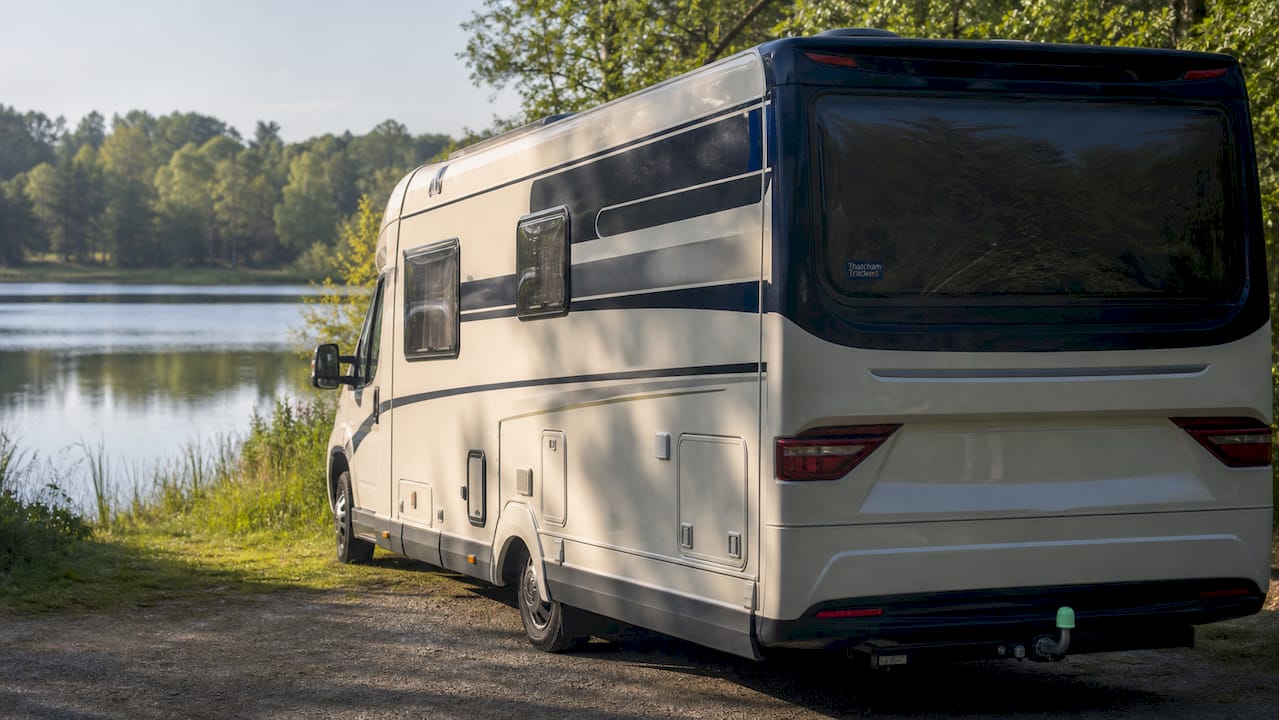
A leisure vehicle tracker is a concealed GPS and communication device that reports the exact location and security status of your motorhome, caravan, or campervan to an online platform or monitoring centre. The industry standard term for this technology is a “GPS tracking unit,” though leisure vehicle tracker is the term most UK owners and insurers use in practice. Understanding what is leisure vehicle tracker technology, how it works, and what it costs is the fastest way to protect a vehicle that often sits unattended for weeks at a time.
Leisure vehicles are high-value targets. A motorhome can cost upwards of £100,000, yet many owners store them in open fields or unlit sites with no active security. A GPS tracking unit sends precise location data and tampering alerts to inform owners where their vehicle is in real time. Thatcham Research, the UK’s central automotive risk intelligence organisation, independently tests and certifies these devices. Thatcham Trackers supplies a range of those certified products directly to UK owners.
How do leisure vehicle trackers work?
A leisure vehicle GPS tracker determines position using satellite trilateration. GPS calculates location with at least four satellites, then uploads coordinates via cellular or other communication to the owner’s device. The GPS element handles positioning. A separate communication layer, typically GSM cellular, transmits that position to a smartphone app or a professional monitoring centre.
Cellular networks deliver near-instant updates in most UK locations. However, leisure vehicles frequently travel to remote campsites where cellular coverage is weak or absent. Some trackers fall back on satellite communication in remote areas, though satellite updates carry a latency of 10–60 minutes compared to the near-instant response of cellular. That gap matters enormously in a theft scenario, where every minute of delay reduces recovery chances.
Most trackers also monitor for tampering events. If someone disconnects the vehicle’s battery, cuts a wire, or moves the vehicle without authorisation, the device triggers an alert to the monitoring centre or directly to your phone. Recovery mode activates automatically, increasing update frequency to give police or recovery teams a live position feed.
Power configuration is a practical consideration owners often overlook. Two main options exist:
- Hardwired trackers connect directly to the vehicle’s leisure battery for continuous, uninterrupted updates.
- Battery-powered trackers operate as stand-alone asset location devices. They wake periodically to conserve power but switch to active recovery mode when theft is detected.
Pro Tip: If your caravan or motorhome spends long periods in storage, a battery-powered tracker avoids the need for a professional wiring installation. Just confirm the battery life covers your longest storage period before committing.
What types of leisure vehicle trackers are available?
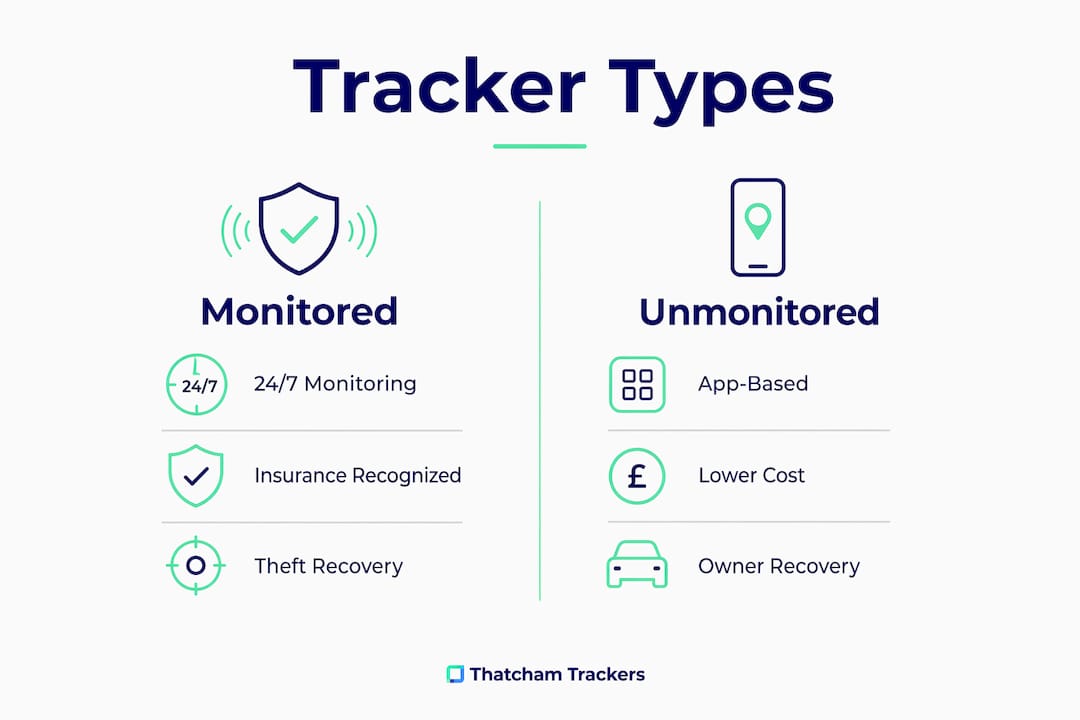
Not all tracking devices are equal. The distinction between monitored and unmonitored systems is the most important comparison any owner should understand before purchasing.
Monitored trackers provide coordinated theft recovery and are usually insurance-recognised. Unmonitored app-based trackers carry a lower price but offer limited recovery effectiveness. For leisure vehicles, where theft often occurs overnight and the vehicle may not be checked for days, that difference is critical.
Thatcham s5 and s7 ratings explained
Thatcham Research assigns security ratings to certified tracking devices. The two most relevant for leisure vehicles are:
- S5: A monitored tracking system with a 24/7 control centre. The centre contacts the owner and police when theft is detected. S5 and S7 certification fulfils insurer requirements and improves theft recovery chances.
- S7: A driver identification system that adds an additional layer. The vehicle cannot be driven without the owner presenting a tag or fob, reducing keyless relay theft risk.
Tracker type comparison
| Feature | Monitored (S5/S7) | Unmonitored App-Based |
|---|---|---|
| 24/7 monitoring centre | Yes | No |
| Insurance recognition | Yes (Thatcham approved) | Rarely |
| Theft recovery support | Professional coordination | Owner-managed only |
| Installation | Professional recommended | Self-install possible |
| Annual subscription | £50–£100 | Free or low cost |
| Hardware cost | £400–£800 | Under £250 |
The table makes the trade-off clear. Unmonitored trackers are cheaper upfront, but they place the entire recovery burden on the owner. If your vehicle is stolen while you sleep, an unmonitored tracker will not alert anyone.
Pro Tip: Check the types of motorhome trackers available before purchasing. Some insurers specify S5 as a minimum requirement. Buying an unmonitored device first and upgrading later costs more overall.
What do leisure vehicle trackers cost in the UK?
Typical 2026 UK costs for monitored leisure vehicle trackers range from £400 to £800 for hardware, approximately £200 for professional fitting, plus £50–£100 per year for the monitoring subscription. Unmonitored devices cost under £250 in most cases. The higher cost of monitored systems reflects the professional tracking and recovery infrastructure behind them.
Here is a practical breakdown of what to budget for:
- Hardware purchase. A Thatcham-approved S5 or S7 device typically costs £400–£800. This is a one-off cost and the largest single expenditure.
- Professional installation. Fitting costs around £200 for a hardwired unit. Professional fitting ensures concealment, proper power connection, and full monitoring setup, reducing the risk of device discovery by thieves.
- Annual monitoring subscription. Expect to pay £50–£100 per year to maintain 24/7 monitoring centre access. This is the ongoing cost that keeps the system active. A tracker subscription setup guide can help you understand exactly what each subscription tier covers.
- Insurance savings. Many insurers reduce premiums for owners who fit Thatcham-approved devices. The saving varies by insurer and vehicle value, but on a high-value motorhome it can offset the subscription cost within the first year.
- Battery-powered alternatives. If professional fitting is not practical, a battery-powered asset tracker under £250 removes the installation cost entirely. The trade-off is reduced update frequency and no insurance recognition in most cases.
For a detailed cost comparison across approved devices, the UK tracker cost guide from Thatcham Trackers breaks down hardware and subscription pricing by category.
What are the benefits of fitting a leisure vehicle tracker?
The benefits of vehicle tracking systems extend well beyond simply knowing where your vehicle is. For leisure vehicle owners, the practical advantages cover security, financial savings, and insurance compliance.
Theft deterrence and recovery. A visible warning sticker indicating a monitored tracker is fitted deters opportunistic thieves. When theft does occur, a monitored system alerts a control centre immediately. The centre contacts the owner and notifies police with a live location feed, significantly improving recovery rates compared to unmonitored devices.
Peace of mind during storage. Most caravans and motorhomes spend the majority of the year in storage. A tracker with tamper alerts notifies you the moment anyone interferes with the vehicle, even when it is parked 50 miles from your home.
Insurance compliance and premium reductions. Insurance policies often require Thatcham-approved trackers with monitoring services to qualify for premium reductions. Some high-value motorhome policies make a Thatcham-certified device a condition of cover, not merely a recommendation.
Multi-layer security. Effective leisure vehicle security combines alarms, immobilisers, and monitored tracking to deter thieves and enable rapid recovery. A tracker alone is not a complete solution. Pairing it with a ghost immobiliser or a physical hitch lock creates multiple barriers that most thieves will not attempt to overcome.
“Many owners mistakenly believe GPS-only trackers provide full theft recovery. Communication and monitoring are the components that make real-time recovery possible.”
The limitation of unmonitored trackers is worth stating plainly. An app-based tracker tells you where your vehicle is only after you open the app and notice it has moved. By that point, the vehicle may already be in a shipping container or a chop shop. Monitored systems remove that dependency on the owner noticing the theft themselves.
Key takeaways
A Thatcham-approved monitored tracker is the most effective leisure vehicle security investment available to UK owners in 2026.
| Point | Details |
|---|---|
| Core technology | Trackers use GPS for positioning and GSM or satellite networks to transmit location data. |
| Monitored vs unmonitored | Monitored S5/S7 devices offer 24/7 recovery support; unmonitored trackers do not alert anyone automatically. |
| 2026 UK costs | Budget £400–£800 for hardware, £200 for fitting, and £50–£100 per year for monitoring. |
| Insurance compliance | Thatcham S5 and S7 certification satisfies insurer requirements and can reduce annual premiums. |
| Multi-layer security | Combine a monitored tracker with an immobiliser for the strongest available protection. |
Why a monitored tracker is worth every penny
At Thatcham Trackers, we have seen the full range of leisure vehicle security setups. Owners who fit unmonitored trackers often believe they have covered the risk. They have not. The gap between knowing your vehicle has moved and having a professional team already coordinating with police is the difference between recovery and a total loss claim.
The cost argument against monitored trackers rarely holds up under scrutiny. A £600 device plus £80 per year in monitoring fees is a fraction of the excess on most motorhome policies, let alone the depreciation hit from a stolen vehicle. For vehicles stored away from home, the monitoring centre becomes the security presence the owner cannot provide themselves.
One point that surprises many owners: the type of tracker matters as much as the brand. An S7 device adds driver identification on top of tracking, which directly counters keyless relay theft. For newer motorhomes with keyless entry, that additional layer is not optional. It is the correct specification for the risk profile.
The advice from Thatcham Trackers is straightforward. Match the tracker specification to your vehicle’s value, storage situation, and insurer requirements. Do not buy a cheaper unmonitored device and assume it provides equivalent protection. It does not.
— Thatcham Trackers
Protect your leisure vehicle with a thatcham-approved tracker
Thatcham Trackers supplies a full range of insurance-approved tracking devices for caravans, motorhomes, and campervans. Every device in the collection carries Thatcham Research certification, meaning your insurer will recognise it and your monitoring centre will be active from day one.
Whether you need an S5 monitored tracker for straightforward insurance compliance or an S7 device with driver identification for higher-risk vehicles, Thatcham Trackers has a certified solution. Professional installation is available, and the team can advise on the right specification for your vehicle and insurer. Browse the full Thatcham-approved tracker range to find the right fit for your leisure vehicle.
FAQ
What is a leisure vehicle tracker?
A leisure vehicle tracker is a concealed GPS and communication device fitted to a caravan, motorhome, or campervan. It reports the vehicle’s location and security status to an online platform or professional monitoring centre in real time.
How do leisure vehicle trackers work?
GPS satellites determine the vehicle’s position using trilateration. A cellular or satellite communication module then transmits that position to a smartphone app or monitoring centre, with updates ranging from near-instant on cellular networks to 10–60 minutes on satellite connections.
Are leisure vehicle trackers worth it?
Yes, particularly monitored Thatcham-approved devices. They provide 24/7 theft recovery support, satisfy insurer requirements, and can reduce annual premiums on high-value motorhomes and caravans.
What is the difference between thatcham s5 and s7 trackers?
S5 is a monitored tracking system with a 24/7 control centre that alerts police when theft is detected. S7 adds driver identification, requiring the owner to present a tag or fob before the vehicle will start, which directly counters keyless relay theft.
Do i need a professional to install a leisure vehicle tracker?
Hardwired trackers require professional installation to maintain concealment, correct power connection, and insurance compliance. Battery-powered asset trackers can be self-installed, though they typically do not qualify for insurance recognition.