

Specialist vehicle tracking systems for large vehicles are defined as telematics devices engineered specifically to meet the operational, regulatory, and security demands of heavy goods vehicles, coaches, and large fleet assets. Standard car GPS units simply cannot fulfil these requirements. Fleet managers running HGVs, articulated lorries, or large vans face a distinct set of risks: cargo theft, driver hours violations, fuel waste, and routing errors that a generic tracker will never flag. Understanding why large vehicles need specialist trackers is the first step toward protecting your assets and reducing operating costs in 2026.
Why large vehicles need specialist trackers: the core differences
Standard GPS devices are built for passenger cars. They are incompatible with the diagnostic connectors found in heavy vehicles, specifically the J1939 and FMS interfaces that HGVs use to communicate engine data, fault codes, and sensor readings. Fitting a car tracker to an HGV can trigger false engine fault codes and create data gaps that undermine both maintenance planning and compliance records. Heavy trucks require J1939 or FMS-compatible connectors for reliable, uninterrupted operation.
Ruggedisation is the second major distinction. Large vehicles generate significant vibration, operate in extreme temperatures, and spend long hours in environments that would damage consumer-grade hardware. Specialist trackers are built to withstand these conditions. They also support dual SIM failover and multi-constellation GNSS reception, maintaining uninterrupted data transmission in urban canyons, tunnels, and remote motorway stretches where a single network signal drops out.
Routing intelligence is a third area where standard GPS fails entirely. A car navigation system does not account for bridge heights, weight restrictions, or narrow lanes. Standard car GPS units cause costly delivery delays and accidents when used in heavy vehicles. Specialist systems incorporate vehicle dimension profiles so routing decisions reflect the actual constraints of the asset being tracked. You can read more about GPS vehicle tracking basics if you need a grounding in how these systems work before comparing options.
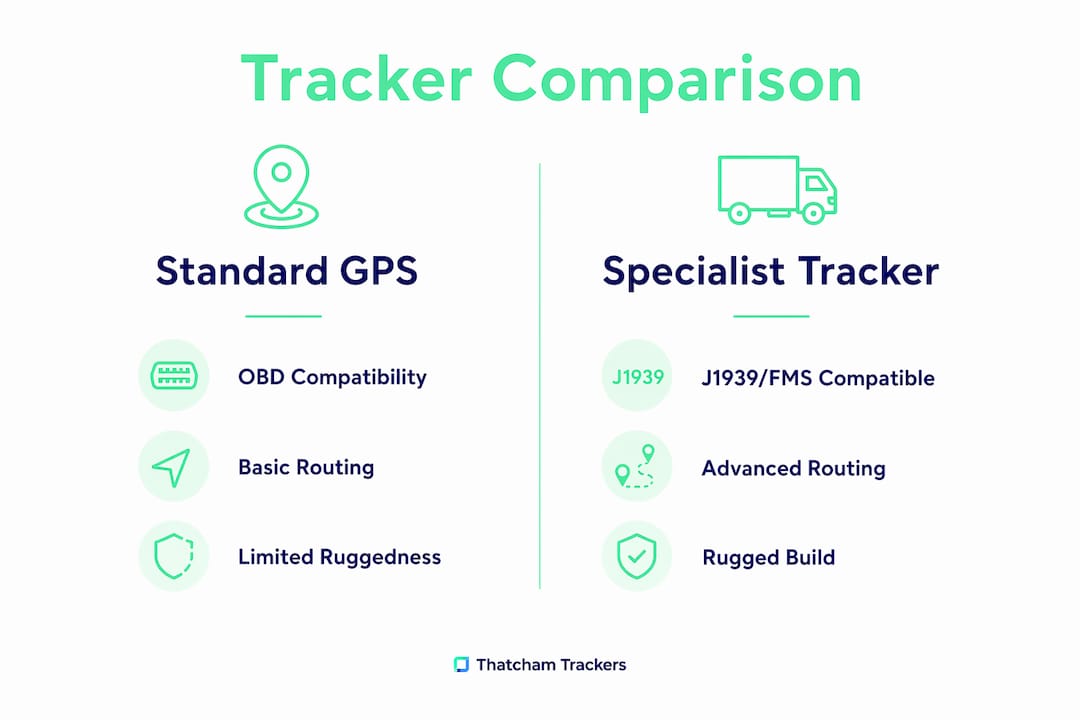
| Feature | Standard GPS tracker | Specialist HGV tracker |
|---|---|---|
| Vehicle connector compatibility | OBD-II (car standard) | J1939 / FMS (HGV standard) |
| Ruggedisation | Consumer grade | Industrial grade |
| Routing intelligence | Passenger vehicle only | Weight, height, and width aware |
| Signal redundancy | Single SIM, single network | Dual SIM failover, multi-constellation |
| Local data caching | Rarely included | Standard feature |
| Compliance data capture | Not applicable | Tachograph integration |
Pro Tip: Before purchasing any tracker for an HGV, confirm the device lists J1939 or FMS connector support in its technical specification. If the supplier cannot confirm this, the device is not built for your vehicle.
How do specialist trackers improve compliance and efficiency?
Compliance is the most immediate financial risk for large fleet operators. Driver hours regulations under EU and UK tachograph rules carry fines and licence suspensions that can ground a fleet. Automated compliance reporting with specialist telematics replaces error-prone manual tachograph processes, preventing both fines and the administrative burden of paper records. Remote tachograph downloads save hours of administrative time each week and reduce human error to near zero.
Fuel is the largest single cost in running an HGV fleet. Fuel accounts for 35% of HGV operating costs, and specialist telematics can reduce fuel consumption by up to 15% per vehicle. That translates directly to lower monthly operating costs across every vehicle in the fleet. The key efficiency gains specialist systems deliver include:
- Driver hours monitoring: Real-time visibility of driver availability prevents violations before they occur.
- Fuel consumption tracking: Identifies idling, harsh braking, and aggressive acceleration that waste fuel.
- Driver behaviour scoring: Flags patterns that increase wear and fuel use, enabling targeted coaching.
- Automated reporting: Removes manual data entry from compliance workflows.
- Unauthorised use detection: Alerts fleet managers to vehicle movement outside approved hours or routes.
Automated driver compliance monitoring also reveals real-time driver availability, which directly improves scheduling accuracy. A dispatcher who can see which drivers have hours remaining avoids the costly mistake of assigning a run to a driver who is legally unavailable.
Pro Tip: Integrate your specialist tracker platform with your existing transport management software via API from day one. Retrofitting integrations later costs significantly more time and money than building the connection at the point of installation.
What security benefits do specialist trackers offer for large fleets?
Cargo theft is a serious and growing problem for UK fleet operators. A standard tracker tells you where the vehicle is. A specialist system tells you where the vehicle is, who is driving it, whether the trailer has been detached, and whether any doors have been opened outside a scheduled stop. Combining GPS tracking with driver ID verification and asset monitoring platforms offers a security solution that goes well beyond simple location tracking.
Trailer telematics deserve particular attention. Trailers are frequently left at depots, customer sites, and service areas without a powered vehicle attached. Trailer telematics track unpowered assets, and with up to 20% of trailers potentially sitting idle at any time, knowing exactly where each one is prevents cargo loss and supports fleet right-sizing. Specialist trailer tracking operates independently of the tractor unit, so the asset remains visible even when the cab drives away.
“58% of fleet managers agree that multiple security layers are needed to protect cargo effectively, and 52% cite driver identity verification as a critical component of that strategy.” — Geotab cargo security research
The security features that specialist systems bring together include:
- Geofencing alerts: Instant notification when a vehicle or trailer leaves an approved zone.
- Driver identity verification: Key fob, PIN, or biometric confirmation before the vehicle can move.
- Smart lock integration: Remote locking and unlocking of cargo doors with event logging.
- Camera integration: Dashcam and cargo camera feeds linked to the tracking platform.
- Real-time theft alerts: Immediate notification of unauthorised movement, towing, or door breach.
Insurance is a direct financial benefit of this security layer. Thatcham Research independently tests and certifies vehicle security systems in the UK. Insurance companies use Thatcham ratings to assess theft risk, and a Thatcham-approved tracker on a large vehicle can reduce premiums meaningfully. You can review theft prevention tracker strategies for a fuller picture of how layered security works in practice.
How do fleet managers implement specialist tracking effectively?
Installation method determines the reliability of the data you receive. There are two main approaches, and the right choice depends on the asset type and how permanently it is deployed.
-
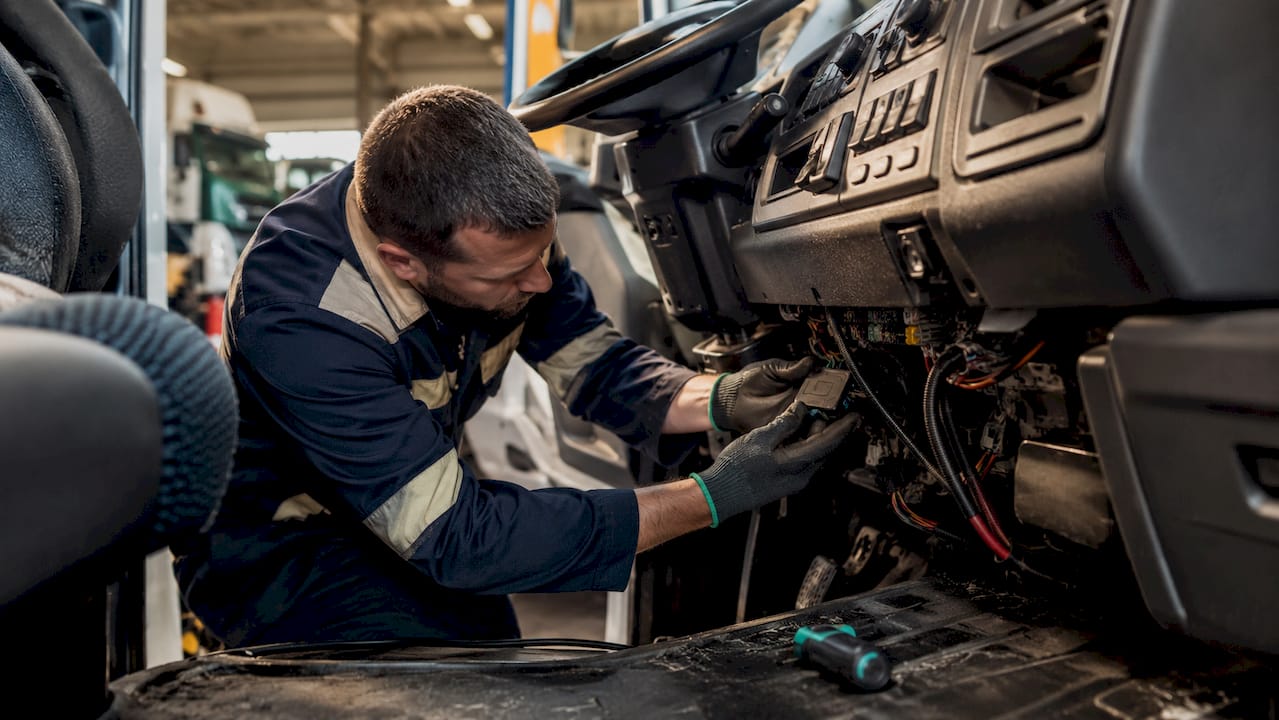
Hardwired installation connects the tracker directly to the vehicle’s power supply and diagnostic bus. This is the correct approach for primary fleet vehicles. It provides continuous power, full integration with J1939 or FMS data, and no risk of the device being removed or losing power. Hardwired units should be installed by a qualified technician to avoid wiring errors that cause data gaps or fault codes.
-
Plug-and-play installation uses a standard connector port and requires no wiring. This suits temporary assets, hired vehicles, or trailers where a permanent installation is impractical. The trade-off is that plug-and-play units can be removed easily, which reduces security, and they may not access the full range of vehicle data available through a hardwired connection.
Professional fleet managers implement mixed-installation strategies, using hardwired setups for primary vehicles and plug-and-play units for temporary assets. This balances flexibility with security across a mixed fleet. The most common pitfall is installing a tracker in a location with poor antenna visibility, which causes signal loss and creates gaps in compliance records. Antenna placement should be confirmed during installation, not assumed.
Pro Tip: Request a data completeness report from your tracker provider after the first 30 days of operation. Any gaps in trip records indicate an installation or connectivity issue that needs resolving before it affects a compliance audit.
How do specialist trackers support future-proofing for large fleets?
Fleet technology is moving quickly. The trackers you install today need to remain fit for purpose as networks, regulations, and vehicle types evolve. Specialist systems are built with this in mind. Failing to upgrade to specialist tracking technology leaves fleets exposed to compliance penalties, operational inefficiencies, and rising insurance premiums as standards tighten.
The key future-proofing features to look for in a specialist tracker are:
| Capability | Why it matters |
|---|---|
| 5G network readiness | Faster data transmission for real-time video and large data payloads |
| Multi-constellation GNSS | Combines GPS, GLONASS, and Galileo for accuracy in signal-poor environments |
| IoT sensor integration | Monitors cargo temperature, humidity, and door status independently |
| Open API | Connects tracker data to any fleet management or ERP platform |
| Over-the-air firmware updates | Keeps the device current without physical intervention |
Scalability matters as much as current capability. A specialist system that handles ten vehicles should handle one hundred without requiring a platform change. Open API architecture is the practical test of this. If your tracker provider cannot demonstrate API connectivity with your existing fleet management software, the system will create data silos rather than eliminating them. You can compare types of vehicle tracking technology to assess which approach fits your fleet’s current and future needs.
Pro Tip: Ask your tracker supplier for their product roadmap before signing a multi-year contract. A supplier with no clear 5G or IoT integration plan may leave your fleet on outdated hardware within two years.
Key takeaways
Specialist trackers are the only viable choice for large vehicle fleets because standard GPS devices lack the connectors, durability, compliance tools, and security features that HGV operations legally and operationally require.
| Point | Details |
|---|---|
| Connector compatibility | Specialist trackers use J1939 or FMS interfaces; standard OBD-II units trigger faults on HGVs. |
| Compliance automation | Remote tachograph downloads and automated reporting prevent fines and reduce admin time. |
| Fuel and cost savings | Telematics can cut fuel consumption by up to 15%, directly reducing the largest HGV operating cost. |
| Multi-layer security | Combining GPS, trailer tracking, and driver ID verification significantly improves cargo recovery rates. |
| Future-proofing | Open API, 5G readiness, and IoT sensor support protect the value of your tracker investment long term. |
The case for specialist trackers: a view from Thatcham Trackers
The most common mistake fleet managers make is treating tracker selection as a procurement decision rather than a risk management decision. A cheaper, generic unit looks attractive on a spreadsheet. In practice, it generates false fault codes, misses compliance data, and provides no trailer visibility. The cost of a single tachograph fine or a stolen trailer load dwarfs the price difference between a standard GPS unit and a proper specialist system.
What experience in this sector shows clearly is that the fleets with the strongest security and compliance records are not necessarily the largest. They are the ones that matched their tracking technology to their actual vehicle type from the start. Thatcham Research certification exists precisely because the gap between a certified device and an uncertified one is measurable and significant. Insurance companies know this. Fleet operators who fit Thatcham-approved devices on their large vehicles see the benefit in their premiums and in their audit outcomes.
The technology is not complicated to use once it is correctly installed. The barrier is almost always the initial decision to invest in the right equipment rather than the cheapest available option.
— Thatcham Trackers
Thatcham Trackers: specialist security for large vehicle fleets
Thatcham Trackers supplies insurance-approved tracking devices independently tested and certified by Thatcham Research, the UK’s central automotive risk intelligence organisation. Every device in the range is assessed against rigorous security standards, giving fleet managers confidence that their vehicles carry equipment insurers recognise and reward.
For large vehicle operators, the Thatcham-approved tracker range includes options suited to HGVs, vans, and mixed commercial fleets. Devices are available at S5, S5 Plus, and S7 certification levels, with S7 representing the highest standard of tracking and driver verification currently available. Fitting a certified device reduces theft risk, supports compliance, and can lower insurance premiums. Contact Thatcham Trackers directly to confirm which device is correct for your fleet.
FAQ
Why can’t I use a standard car tracker on an HGV?
Standard car trackers use OBD-II connectors, which are incompatible with the J1939 and FMS diagnostic interfaces in HGVs. Fitting the wrong device can trigger false engine fault codes and create gaps in compliance data.
Do specialist trackers help with tachograph compliance?
Specialist telematics systems automate driver hours monitoring and support remote tachograph downloads, replacing manual processes that are prone to error and can result in fines or licence suspensions.
How does trailer tracking work without a powered vehicle?
Trailer telematics units carry their own power source and transmit location data independently of the tractor unit. This means the trailer remains visible even when it is parked or detached at a depot or customer site.
Will a Thatcham-approved tracker reduce my fleet insurance premium?
Thatcham Research certifies vehicle security devices to standards that insurers use when assessing theft risk. Fitting a Thatcham-approved tracker on a large vehicle can qualify the operator for a reduced premium, though the exact saving depends on the insurer and policy.
What is the difference between S5 and S7 Thatcham tracker categories?
S5 trackers provide GPS location monitoring with a 24-hour monitoring centre response. S7 trackers add driver identity verification, making them the higher-security option and the preferred choice for high-value commercial vehicles.