

GPS theft recovery is defined as the use of satellite positioning technology to locate and retrieve stolen vehicles in real time. The role of GPS in theft recovery has shifted from a premium add-on to a practical necessity for UK car owners, particularly as vehicle crime continues to rise. Systems certified by Thatcham Research, the UK’s central automotive risk intelligence organisation, set the benchmark for recovery effectiveness. Thatcham-approved trackers combine live location data, professional monitoring, and direct police coordination to achieve recovery rates that basic alarms simply cannot match.
How does GPS tracking technology work to recover stolen vehicles?
GPS theft recovery works by continuously sharing location data from a tracker fitted to the vehicle to a telematics platform, which then coordinates with law enforcement. The tracker receives signals from multiple satellites, calculates its position, and transmits that position over a cellular network every few seconds. That data feeds into a monitoring centre, which can generate a live tracking link and pass it directly to police.
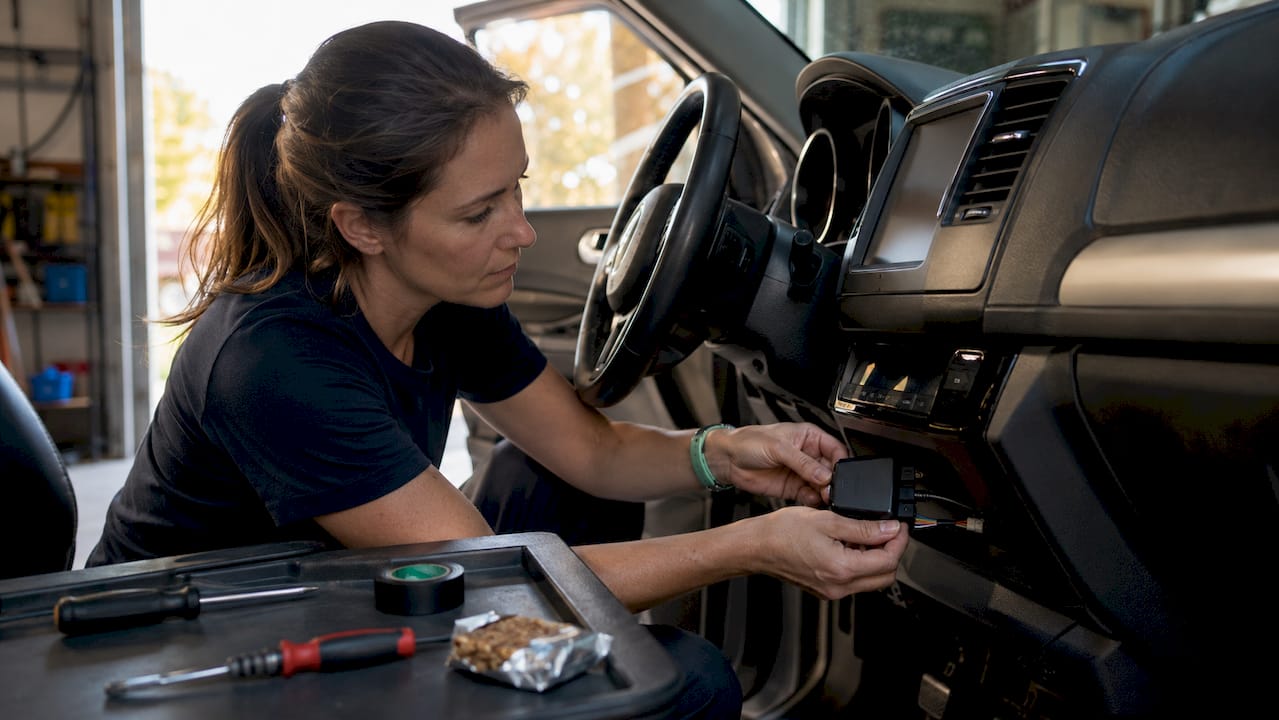
The critical advantage over traditional methods is continuity. Older recovery approaches relied on a last-known position, which gave thieves time to move the vehicle far from the scene. GPS systems provide a continuous movement history that narrows the search area in real time and allows police to intercept rather than search.
Key components of a GPS theft recovery system include:
- GPS tracker unit: Fitted discreetly to the vehicle, determines position via satellite.
- Cellular modem: Transmits location data over 4G or LTE networks to the monitoring platform.
- Telematics platform: Receives, stores, and displays location history and live position.
- Monitoring centre: Staffed operators who detect alerts, verify theft, and contact police.
- Live tracking link: A shareable URL that law enforcement can use immediately to track the vehicle without specialist equipment.
Pro Tip: Ask your tracker provider what the update frequency is. A system that reports position every 10 seconds gives police a far tighter intercept window than one that updates every two minutes.
What features make GPS recovery systems more effective?
GPS trackers face real-world obstacles during a theft. Thieves drive through tunnels, park in underground car parks, and increasingly use signal jammers to block transmissions. The best systems are built to counter each of these tactics.
Dead reckoning
Dead reckoning is the most significant resilience feature in modern GPS trackers. When satellite signal is lost, such as inside a multi-storey car park, the device estimates position using accelerometers and gyroscopes to calculate speed, direction, and distance travelled. The tracker fills the blind spot and resumes accurate GPS positioning the moment signal returns. Without dead reckoning, a thief who knows the local tunnel network can effectively disappear from the tracking map.
Backup battery and tamper detection
- Backup battery: Thieves often cut the vehicle’s main power supply to disable a tracker. A backup battery keeps the device transmitting for 24–36 hours after tampering, giving police a substantial window to act.
- Tamper alerts: The monitoring centre receives an immediate notification if the device detects interference. Operators can escalate to police before the thief has left the area.
- Anti-jamming design: Quality trackers log the last confirmed position before signal loss and resume transmission automatically. Some devices also operate on multiple network frequencies to reduce jamming effectiveness.
- Covert installation: Professional fitting places the tracker in a location that is difficult to find without specialist knowledge, reducing the chance of physical removal.
Pro Tip: When choosing a tracker, confirm it has an internal backup battery rated for at least 24 hours. This single feature is the difference between a recoverable vehicle and a write-off.
Thatcham categories compared: which GPS tracker standard matters?
Insurance often requires specific standards such as Thatcham’s S5 or S7 monitored trackers, reflecting that GPS hardware alone is insufficient without comprehensive monitoring and response. Thatcham Research independently tests and certifies vehicle security systems. Insurers use these ratings to assess theft risk, and many high-value vehicle policies require a Thatcham-approved device as a condition of cover.
| Category | Monitoring | Driver recognition | Typical use case | Insurance benefit |
|---|---|---|---|---|
| S5 | 24/7 professional monitoring | Yes, automatic | High-value cars, prestige vehicles | Significant premium reduction |
| S5 Plus | 24/7 professional monitoring | Yes, enhanced | Performance and luxury vehicles | Maximum reduction, often mandatory |
| S7 | 24/7 professional monitoring | No | Standard cars, vans | Moderate premium reduction |
| Non-approved tracker | None or self-monitored | No | General awareness | Minimal or no insurance benefit |
The practical difference between S5 and S7 is driver recognition. S5 devices identify whether the authorised driver is present, typically via a key fob or tag. If the vehicle moves without that tag, the monitoring centre is alerted automatically. S7 devices rely on movement detection without driver identification. Both categories require professional monitoring, which is the feature that drives recovery rates above 90% in independently assessed systems.
A non-approved tracker with no monitoring centre is entirely dependent on the owner noticing the theft and opening an app. That delay alone can cost the recovery.
What should car owners do in the first 30 minutes after theft?
The first 30 minutes after theft detection are the most critical window for recovery. Actions taken in this period determine whether police can intercept the vehicle or whether it disappears into a container or chop shop.
- Open your tracker app immediately. Confirm the vehicle is moving and note the current location. Screenshot the position with a timestamp.
- Call 999. Report the theft and state that you have a live GPS tracker on the vehicle. Ask for a reference number.
- Share the live tracking link. Most professional platforms generate a shareable URL that police can open on any device. Send this to the officer handling your case.
- Provide update frequency information. Tell police how often the tracker reports position. A 10-second update rate allows for a moving interception rather than a static search.
- Do not follow the vehicle yourself. This is a safety risk and can complicate the police response. Your role is to provide data, not to pursue.
- Contact your monitoring centre. If you have a professionally monitored system, call them. They will have already received the tamper or movement alert and may have initiated police contact ahead of you.
Continuous live updates are more useful to police than a single static point. Real-time, shareable tracking links give officers the ability to coordinate across units and set up interception points rather than driving blind to a last-known location.
Pro Tip: Save your tracker provider’s emergency number in your phone before you ever need it. In a theft situation, searching for contact details wastes minutes you cannot afford to lose.
Key takeaways
GPS theft recovery is most effective when live location data, professional monitoring, and rapid police coordination work together from the moment a vehicle is stolen.
| Point | Details |
|---|---|
| Real-time data is decisive | GPS provides continuous location updates that allow police to intercept rather than search. |
| Resilience features matter | Dead reckoning and backup batteries keep tracking active through tunnels, garages, and tampering. |
| Thatcham approval carries weight | S5 and S7 certified systems include professional monitoring, which drives recovery rates and reduces insurance premiums. |
| The first 30 minutes are critical | Sharing a live tracking link with police immediately after theft is the single most effective recovery action. |
| Hardware alone is not enough | A tracker without professional monitoring depends entirely on the owner noticing the theft in time. |
Thatcham Trackers’ view on GPS recovery and what owners often get wrong
The most common misconception Thatcham Trackers encounters is that fitting any GPS tracker guarantees recovery. It does not. GPS mapping alone does not guarantee recovery. The key is rapid response combined with live data sharing to authorities. A tracker that sits unmonitored in a glove box app is only as good as the owner’s reaction time at 3am.
The second misconception is that thieves cannot defeat GPS. They can attempt to, using jammers and by targeting the power supply. What they cannot easily defeat is a system with dead reckoning, a hidden backup battery, and a monitoring centre that has already called police before the owner has woken up. Security designs must anticipate GPS jamming. The technology has caught up with the tactics, but only in properly certified devices.
The insurance angle is also underestimated. Thatcham Trackers regularly sees owners who have fitted a non-approved tracker and assume their insurer will treat it the same as a certified S5 or S7 device. They will not. The Thatcham certification exists precisely because insurers need independent verification that a device performs as claimed. A 4.8 out of 5 rating on Trustpilot is reassuring. A Thatcham Research certificate is what actually moves the premium.
The practical advice is straightforward. Fit a Thatcham-approved device with professional monitoring. Know your tracker provider’s emergency number. Share the live link with police the moment you report the theft. Those three steps, done in order, give you the best realistic chance of getting your vehicle back intact.
— Thatcham Trackers
Thatcham-approved GPS trackers for reliable theft recovery
Thatcham Trackers supplies insurance-approved GPS tracking devices that meet the standards set by Thatcham Research. Every device in the range has been independently tested and certified, giving car owners and insurers confidence in the system’s performance.
The full range of Thatcham-approved trackers covers S5, S5 Plus, and S7 categories, with professional monitoring included as standard. Whether you drive a standard family car or a high-value prestige vehicle, there is a certified option suited to your insurer’s requirements. Thatcham Trackers is rated 4.8 out of 5 on both Trustpilot and Google Reviews, reflecting consistent reliability in supply, installation, and customer support. For guidance on which category suits your vehicle, visit Thatcham Trackers directly.
FAQ
How does GPS help recover a stolen vehicle?
GPS trackers transmit the vehicle’s live position to a monitoring platform, which shares that data with police. Real-time location data enables faster coordination and immediate recovery action compared to traditional delayed methods.
What is the difference between Thatcham S5 and S7 trackers?
S5 trackers include automatic driver recognition via a key fob or tag, alerting the monitoring centre if the vehicle moves without the authorised driver present. S7 trackers use movement detection without driver identification, making them suitable for standard vehicles where the insurance requirement is monitored recovery rather than driver verification.
Can thieves disable a GPS tracker?
Thieves can cut the vehicle’s power supply or use signal jammers, but quality trackers counter this with backup batteries lasting 24–36 hours and dead reckoning technology that maintains position estimates without satellite signal.
Does a GPS tracker reduce my car insurance premium?
A Thatcham-approved tracker with professional monitoring can reduce premiums because insurers recognise the certification as independent proof of performance. Non-approved trackers typically carry no insurance benefit.
What should I do immediately after my car is stolen?
Open your GPS tracker app, call 999, and share the live tracking link with police within the first 30 minutes. Do not attempt to follow the vehicle yourself.